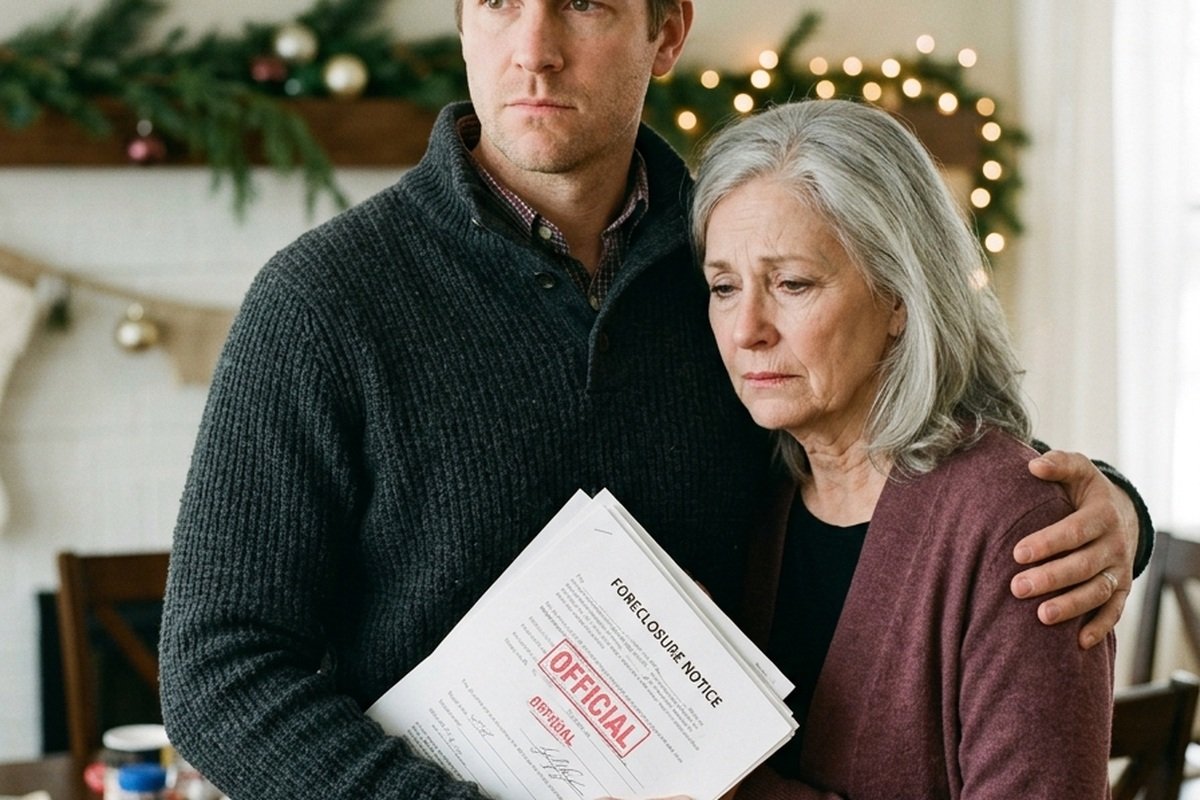
The tax notice was addressed to a tutoring company I had never heard of, but the property listed underneath it was my house.
NORTH LOOP LEARNING SERVICES, 418 Willow Avenue.
The city wanted documentation for a home-business assessment and an appointment to inspect the premises. I read the notice twice on my front step while a delivery driver carried two cartons marked WORKBOOKS—GRADE 6 toward my door.
"Are you North Loop?" he asked.
I said no. Then I recognized my best friend's handwriting on the shipping labels.
Tessa and I had known each other since our first year teaching at the same middle school. She left the district three years earlier and built a tutoring service from library rooms, coffee shops, and rented desks. I designed her first flyer. She helped me paint the room that became my home office. When her apartment building started rejecting business deliveries, she asked if two boxes could come to my porch before the fall term. I said yes.
I did not say she could make my house the legal address of her company.
I called her from the step. She was silent for so long that I could hear a student reading fractions in the background.
"I can explain tonight," she said.
"Can you explain why the city thinks I operate a tutoring center?"
She asked me not to call the number on the notice until we spoke. That request did more damage than a bad explanation would have. It told me there was something she needed time to arrange before I reached the people whose records carried my address.
I moved the cartons into the garage because rain had started. Then I searched the state business registry. North Loop Learning Services had been formed eighteen months earlier. The address had changed to mine seven weeks ago. Under premises contact, the filing listed my full name.
Tessa had not merely redirected mail. She had made me part of the record.
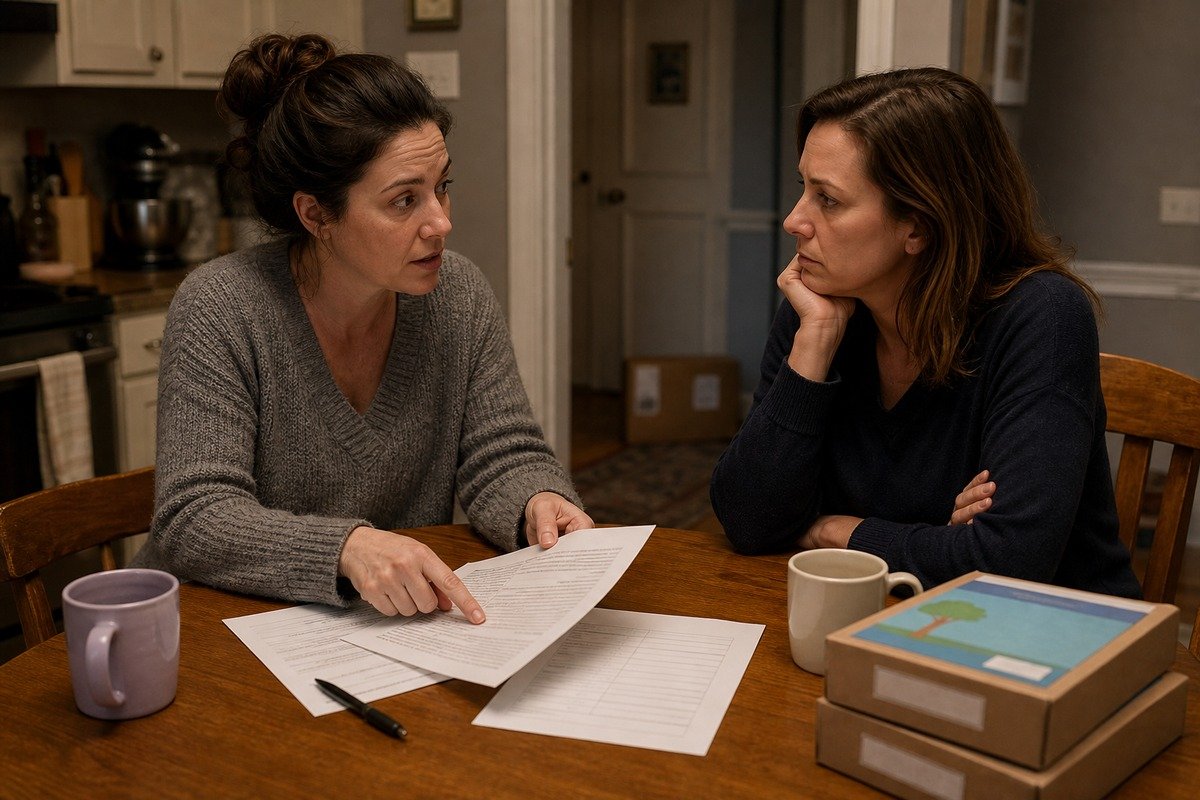
She arrived after eight carrying takeout from the Thai place we used to visit after parent conferences. I left the bag unopened. Tessa sat at my kitchen table and said the change was temporary.
Her former business partner, Caleb, had ended their shared-office lease with ten days' notice. Tessa's apartment prohibited registered businesses, and the city required a stable local address before renewing her tutoring license. Without the renewal, she could not keep two school-district vendor contracts or pay the two graduate students who worked for her.
"Why is my name on it?" I asked.
Tessa said the online form required a person responsible for access to the premises. She used my name because I owned the house and had agreed to receive boxes.
"Boxes are not students, an inspection, or legal responsibility."
"No students come here. Nothing happens here. It's an address."
The city notice on the table said otherwise. It asked about parking, occupancy, fire access, signage, employees, and customer visits. My homeowners policy allowed a home office for my own consulting work, not another company's registered tutoring location.
Tessa began listing everything she stood to lose. One district contract covered thirty students who needed math support before winter exams. Her assistants depended on their weekly hours. A commercial mailbox did not satisfy the license because tutoring records had to be stored at an approved operating location. She said she intended to find a small office before the city contacted anyone.
"The city did contact someone," I said. "Me."
She cried then, quietly and angrily, as though my refusal to treat the filing as paperwork had converted her emergency into betrayal. She reminded me that she stayed in my guest room after my divorce and never asked me for rent. I reminded her that she had been invited.
The word sat between us.
Tessa slept at a hotel that night instead of in my guest room. The next morning, a father and his daughter rang my doorbell. They had found 418 Willow Avenue on an invoice and believed their Saturday session had moved. The girl held a workbook against her chest and looked embarrassed while I explained that no tutoring happened at my house.
After they left, I called the city.
I told the licensing clerk I owned the property, had not authorized its use, and wanted the inspection paused while the record was corrected. I expected her to tell me the filing had no effect on me. Instead, she asked whether business records or client materials were stored on site. I looked at the cartons in my garage and said yes, temporarily.
The clerk opened a disputed-address case. She said the city would not fine me while it investigated, but I needed to notify my insurer and provide a written statement. North Loop's license renewal would be placed on hold.
Tessa called within twenty minutes. One of her vendor portals had changed to pending review. She accused me of shutting down the business before giving her a day to fix it.
"You had seven weeks," I said.
"I had seven weeks to keep six things from collapsing."
"And you chose the thing that made the collapse arrive at my house."
We ended the call without saying goodbye.
That afternoon, my insurance agent reviewed the notice and the business filing. She said an address alone did not automatically create liability, but the cartons, premises-contact designation, and customer visit created questions I could not ignore. She asked whether Tessa had access to the house.
She did. I had given her a temporary door code while she painted my office, and I had never deleted it.
The smart-lock log showed she had used the code twice in the previous month while I was at work.
When I confronted her, Tessa admitted she had placed student assessment folders in my locked filing cabinet before a district records audit. She said the folders contained no medical information, only academic plans and parent contact sheets. She had moved them back to her car the same day.
That was the turning point. Until then, I could still describe the problem as a frightened friend using the wrong address to save a useful business. The door log showed a second decision. Tessa had entered my home and stored client records there because the filing needed to look true if anyone asked.
She had not only borrowed my address. She had recruited my house into a story without telling me.
I disabled the code and asked her to meet me at the city licensing office the next morning. She wanted to correct the filing online and avoid a formal meeting. I refused. The same system that had accepted my name without my knowledge needed to record my withdrawal clearly.
At the office, Tessa brought a folder of lease inquiries, bank statements, and vendor deadlines. I brought the property deed, insurance letter, and a written declaration that North Loop had no permission to operate or store records at 418 Willow Avenue.
The licensing supervisor separated the choices. My address would be removed immediately. Tessa could apply for a fourteen-day provisional mailing address while securing an approved workspace, but she could not tutor under the pending renewal. She had to notify the districts that the premises information was being corrected. The parent contact sheets also triggered a records-handling review under one contract.
Tessa looked at me and said, "If I lose that district, two people lose work."
I told her I understood the consequence. I also told her I would not keep my address on a false filing to prevent it.
Then I made a narrower offer. I would spend that afternoon calling legitimate coworking offices and help compare their lease terms. I would not sign, guarantee rent, receive more deliveries, store files, or appear on any form.
She accepted without thanking me.
We found a converted dental office with two small rooms, lockable cabinets, and evening access. The rent was higher than Tessa wanted but lower than a full tutoring suite. Her assistants agreed to move several sessions online during the license pause. One district accepted the correction and reinstated her after twelve days. The other canceled one month of sessions and required a new records audit. Tessa paid her assistants for the lost week from her savings.
The consequences did not disappear because the business survived. My insurer required a signed statement that no commercial activity remained at the house. I returned three later deliveries and spent hours correcting business-directory listings. For months, search results still displayed North Loop beside my street.
Tessa and I did not speak socially for six weeks. We communicated only about mail, each message short enough to look like evidence. I missed her, but missing someone is not the same as being ready to trust her with access.
She eventually asked to meet at the new office. Her company name was printed on a removable sign outside the door. Inside, the student files were in locked cabinets, the occupancy certificate was framed near the entrance, and a typed emergency-contact sheet listed her, her assistant, and the building manager. My name appeared nowhere.
Tessa apologized without mentioning how desperate she had been. She said desperation explained why every shortcut looked temporary; it did not explain why she kept choosing shortcuts that required my ignorance.
I apologized for one thing too. During our first argument, I had treated the tutoring service like a hobby she should simply pause. It was her livelihood and her employees' work. Taking it seriously, however, meant taking its obligations seriously as well.
We rebuilt the friendship in places neither of us owned. Coffee shops, walks, the public garden. When she later needed a reference for a larger office, I wrote honestly about her teaching and refused to comment on financial reliability. She understood the boundary.
The city tax notice remains in my filing cabinet beside the final corrected registration. The two documents use the same address only once: in the line stating that 418 Willow Avenue was removed at the owner's request.
For years, Tessa and I had used friendship as a shorthand for permission. We borrowed coats, shared keys, and arrived without knocking. The business filing showed the limit of that shorthand. Generosity can cover a delivery or an evening on the sofa. It cannot sign someone's name into responsibility they never agreed to carry.