On Tuesday morning, I was sitting at my home office desk on the second floor of my new suburban home on Maple Ridge Road, finishing a software analytics report before my nine o’clock team meeting.
I had purchased the modest three-bedroom brick house four months ago, having spent five years saving every spare dollar while living in a cramped rental apartment across town.
The morning was crisp and quiet, with golden autumn sunshine illuminating our paved asphalt driveway and the manicured lawn of our quiet cul-de-sac.
At eight-fifteen, a heavy commercial flatbed tow truck pulled up to the curb outside our driveway, its diesel engine rumbling loudly through the quiet neighborhood.
A tall man in a dark canvas jacket carrying a heavy black aluminum clipboard climbed out of the cab and walked briskly up our concrete front walkway.
When I opened the front door, the man presented a private investigator identification card and a certified legal repossession warrant bearing the seal of a regional auto financing bank.
“Good morning, sir. I am looking for Maya Chen and the 2022 silver German sedan registered to this residential address,” the investigator announced in a direct, professional voice.
I stood in the doorway in total shock, staring at the repossession warrant and the photograph of the silver sedan printed across the top of the file.
“Maya Chen does not live here, and that car has never been parked in this driveway,” I told the investigator immediately. “I bought this house four months ago, and I live here alone.”
The investigator frowned, flipped open his clipboard, and showed me the borrower verification file submitted to the auto finance company six weeks ago.
Attached to the loan default paperwork was a photocopied municipal electric utility bill in Maya Chen’s name, listing my exact Maple Ridge Road address as her primary permanent residence.
I unfolded the document and examined the utility bill carefully, recognizing my own municipal account number and service address, but with Maya’s name crudely substituted in the recipient header.
The document proved that over four thousand eight hundred dollars in delinquent auto loan payments were past due, and the lender had authorized immediate asset recovery.
Maya had been my roommate two years ago in a shared apartment near the state university, but we had parted ways amicably when our lease expired eighteen months ago.
The realization that Maya had stolen my new residential address and forged a utility statement to secure subprime vehicle financing made my blood turn cold.
The financial consequence was immediate and alarming, because having repossession agents and financial fraud linked to my property could trigger address flagging with credit bureaus and mortgage lenders.
The cost of untangling fraudulent credit liens from a newly purchased property could involve thousands of dollars in legal fees and months of administrative headaches.
“She submitted this utility statement last month as proof of residence to refinance an overdue loan that was already thirty days delinquent,” the investigator explained.
He showed me the loan contract, confirming that Maya had claimed to co-own the property to qualify for a lower interest tier reserved for suburban homeowners.
I felt an overwhelming surge of indignation because Maya had used my hard-earned home purchase as an unearned prop to deceive financial institutions.
I immediately called Maya on her cell phone while the investigator waited on my front porch, listening to the ringing line with a pounding pulse.
“Liam! Long time no talk! How is the new house?” Maya answered cheerfully, sounding completely relaxed and unbothered.
“Maya, there is a repossession recovery investigator and a flatbed tow truck parked in my driveway right now looking for your car,” I told her, my voice sharp and steady.
Maya went dead silent on the line for five seconds before stammering in visible panic.
“Liam, please, you have to tell him I am just visiting family out of state with the car,” Maya pleaded in a frantic whisper.
“You forged my electric bill and registered your overdue four-thousand-dollar loan to my private residential address, Maya,” I told her sternly.
“I had terrible credit after losing my marketing job, Liam, and the finance company was going to repossess the sedan unless I showed proof of residency in a low-risk suburban neighborhood,” Maya admitted.
“You committed document forgery and loan fraud using my home address, Maya,” I replied, refusing to let her excuse her criminal recklessness.
The argument escalated quickly as Maya insisted that she had intended to update her address once she found a new remote consulting contract.
“I just needed a few weeks of breathing room to get back on my feet, Liam, and having a suburban address lowered my monthly financing rate by two hundred dollars,” she argued defensively.
“You put a repossession target on my home and linked my utility account to bank fraud, Maya,” I told her.
That was the moment I discovered that Maya had saved a digital PDF copy of an old joint utility bill from our college apartment and digitally altered the street address and name.
She admitted that she had hidden the silver sedan in an underground parking garage three blocks from her downtown apartment to evade recovery agents.
“You expected me to lie to a licensed investigator and risk criminal obstruction charges just so you could hide a luxury car you cannot afford,” I said.
“Why did you think you could drag my name and home into your financial dishonesty?” I demanded.
I feared that if I did not establish my complete lack of connection to Maya’s loan immediately, the financing bank would report my address to national skip-tracing registries.
I wanted our past friendship to remain a fond memory, but this brazen fraud proved that Maya had zero regard for my legal safety or personal boundaries.
The reason I worked overtime for five years was to purchase a home where I could live in peace, not to serve as a fraudulent front for a delinquent debtor.
Maya believed that because we had been good friends in college, I would instinctively cover for her when the authorities came knocking.
Maya refused to disclose the location of the vehicle, pleading with me to send the investigator away with false information.
“If you give him my apartment address, Liam, they will take my car today and I will have no way to get to my job interviews,” Maya cried over the phone.
“You should have thought about that before you forged my utility bill and committed bank fraud in my name, Maya,” I replied firmly.
I hung up the phone, turned to the repossession investigator, and invited him to inspect my homeowner deed and closing paperwork.
I showed the investigator my original county property title, my driver’s license, and my genuine municipal utility statements.
The investigator verified that Maya Chen had never held any legal or lease interest in my property, confirming that the utility bill was an amateurish forgery.
I signed an official affidavit of non-residency and fraud disclosure, providing the investigator with Maya’s verified downtown apartment address and workplace contact.
The investigator thanked me for my complete cooperation, stamped my address fully cleared in the national asset recovery database, and canceled the on-site tow truck dispatch.
“You did the right thing by clearing your address immediately, Mr Scott,” the investigator told me. “Otherwise, recovery agents would have continued monitoring your street for weeks.”
After the tow truck departed, I drove down to the township police station on Maple Avenue to file a formal incident report for address fraud and forged utility documents.
At noon, the desk sergeant reviewed the forged utility bill and Maya’s admission, issuing me an official police incident report number to protect against future identity theft.
Then I contacted the fraud prevention division of the regional auto financing bank, submitting the police report and my deed affidavit.
The bank’s compliance officer verified the fraud, formally severed my address from Maya’s loan record, and updated their recovery warrant to her downtown location.
Later that afternoon, I placed comprehensive security freezes across all three major credit reporting bureaus and signed up for identity monitoring alerts.
The immediate consequence was a tense and emotional series of angry text messages from Maya’s college friends, who accused me of being disloyal.
In the quiet of my home office, I looked at the township property survey, realizing how much work it had taken to secure this home.
I feared that if Maya’s lender reported our address to national credit repositories, my mortgage refinancing options would be jeopardized.
I wanted my newly purchased home to be completely untainted by subprime default notices or predatory debt recovery.
The reason I acted so decisively was that financial identity theft can linger on public records for years if left uncontested.
Maya thought that because we had shared an apartment in college, she had an ongoing claim to my personal stability.
She believed that a suburban street address was just a piece of convenient data rather than private legal property.
I feared that if I had covered for her, the recovery agency would have pursued me as a co-conspirator in auto loan fraud.
On Tuesday afternoon, after the desk sergeant gave me the official police report, I met with our neighborhood watch captain.
I informed the watch captain that an unauthorized vehicle skip-trace had targeted our street and that the matter was resolved.
The captain commended me for taking swift action, promising that our cul-de-sac security patrol would keep a watchful eye on our block.
On Wednesday morning, I received an official letter from the auto finance company confirming that my address was formally purged from Maya’s file.
The letter apologized for the inconvenience and confirmed that no negative marks would be submitted to consumer credit reporting agencies.
Knowing that my property title and credit standing were completely protected allowed me to finally breathe a sigh of relief.
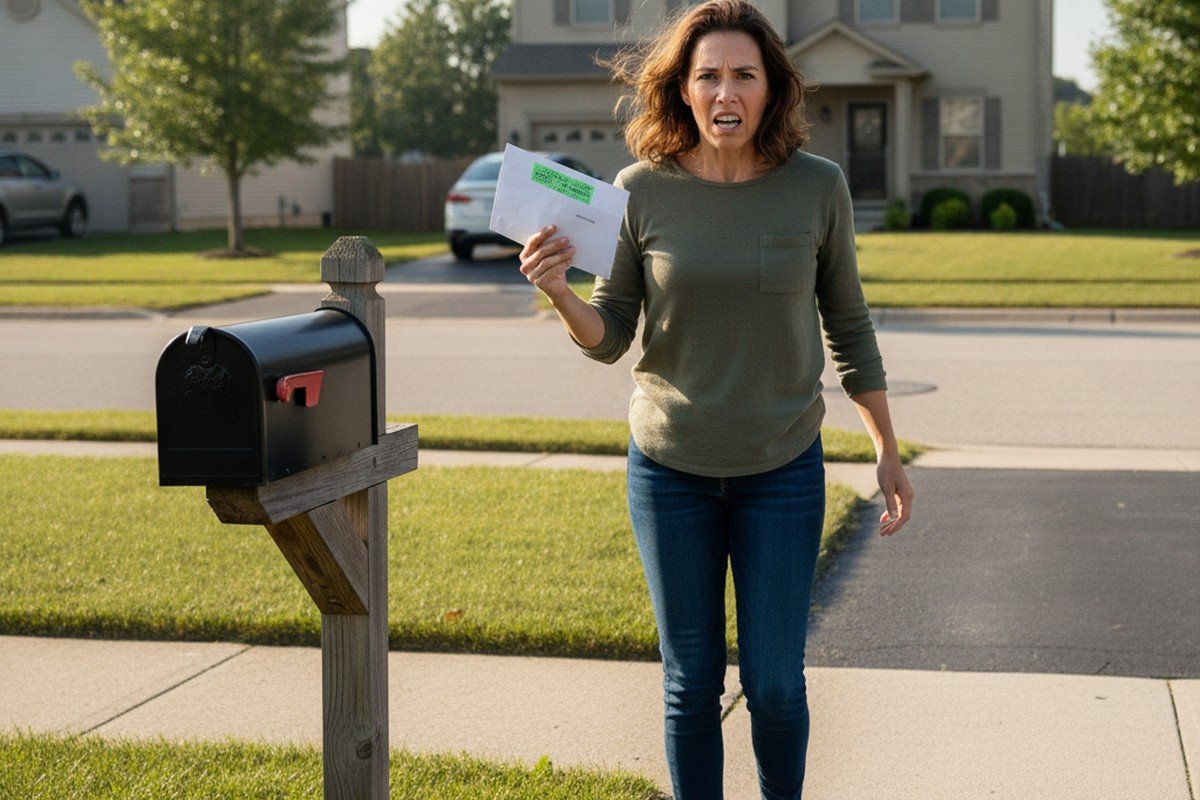
Later that evening, I walked down our paved driveway to collect the evening mail, admiring the quiet stillness of our suburban neighborhood.
The streetlights cast long golden shadows across the asphalt as neighbors walked their dogs and waved from across the street.
At noon on Thursday, I spent two hours organizing my home closing files, storing the police report and fraud affidavits in a fireproof safe.
Having definitive physical documentation gave me complete peace of mind that my household was permanently protected.
I realized that genuine independence means refusing to let anyone compromise your integrity, no matter how close they once were.
On Friday afternoon, I completed the installation of new exterior security motion lights and a digital video doorbell covering the driveway.
Testing the camera feeds on my phone gave me complete confidence that our property perimeter was monitored around the clock.
The quiet suburban cul-de-sac felt like a true sanctuary again, free from the shadow of unpaid debts and fabricated paperwork.
Looking out at the front lawn under the setting sun, I knew that my home and my name were safe and firmly in my own hands.
On Saturday morning, I planted three young dogwood saplings along our property line, watching the autumn soil settle around their roots.
Working with my hands on my own soil gave me an enduring feeling of pride that no outside chaos could diminish.
The boundaries of my life were established and secure, built upon honesty, discipline, and hard work.
As the crisp evening air settled over our quiet cul-de-sac, I felt a deep gratitude for the peace I had protected.
My home remains a sanctuary of truth and hard-won independence, standing strong against deception.
However, when I shared the police report number and explained that Maya had forged my official utility account to secure illegal financing, the mutual friends immediately backed off.
Three days later, the repossession agency successfully impounded the silver sedan from the downtown parking garage, concluding the lender’s recovery operation.
Maya called my phone from an unknown number, leaving a tearful voicemail blaming me for her lost transportation, but I deleted the message without responding.
The cost of handling the incident was one day of lost work and deep emotional stress, but acting decisively protected my credit standing and property rights.
Two weeks later, the municipal utility company updated my account with a dedicated six-digit security passcode, preventing any unauthorized document reproduction.
In the months that followed, our quiet suburban neighborhood returned to its peaceful rhythm, with autumn leaves clearing and winter snow dusting the driveway.
I spent the winter finishing the basement into a home gym and library, enjoying the secure comfort of the home I had earned through honest labor.
Now, my property and financial identity are strictly guarded by comprehensive security protocols that ensure complete safety from outside fraud.
The boundary remains firm and inviolable: personal integrity cannot be compromised for someone else’s reckless choices, and honesty is never up for negotiation.
Standing firm against fraud taught me that true self-respect means refusing to be an accomplice in someone else’s deception.
Every evening when I pull into my quiet driveway, I take pride in knowing that my home stands on an unblemished foundation of truth and earned independence.
Owning a home is about more than property lines; it is about protecting the sanctuary of your name and your peace against anyone who seeks to exploit it.