For seven decades, the weathered two-story Craftsman home on Willow Creek Lane stood as the beating heart of our entire family. It was not merely wood, river stone, and mortar; it was a living monument to human endurance. In the summer of 1954, my grandfather, Arthur Vance, hand-poured the concrete footings after returning home from his twelve-hour shifts at the municipal rail yard. Beside him in the humid Indiana twilight stood my grandmother, Evelyn, hauling buckets of gravel while nursing their firstborn son. Together, board by cedar board, they erected a home meant to shelter generations. But when Arthur died suddenly in a crushing rail yard derailment when the youngest of their six children was barely three years old, the full weight of the world crashed onto Evelyn’s slender shoulders.
Refusing to surrender her children to county foster care or accept charity from pitying relatives, Evelyn made a sacred vow at Arthur’s graveside: she would keep their children fed, clothed, and educated, and she would preserve their family sanctuary no matter the physical cost. For thirty consecutive years, Grandma worked three relentless jobs. Before dawn, she scrubbed the greasy floors of the downtown diner; during the afternoons, she operated high-speed commercial steam presses at the industrial launderette; and late into the frozen winter nights, while her children slept peacefully beneath patchwork quilts, she took in piecework tailoring by the dim glow of a forty-watt desk lamp. Her hands became permanently swollen with severe rheumatoid arthritis, and her back bowed under decades of unyielding labor, but she never complained. Every mortgage note was paid, every school fee was settled, and every child was given a launching pad into comfortable adulthood.
As the years progressed, Arthur and Evelyn’s six children—Richard, Brenda, Donald, Patricia, Gregory, and my mother Margaret—graduated from college, married, and scattered across the country like thistle seeds in an autumn gale. Richard became a wealthy commercial real estate broker in Atlanta; Brenda married a prominent plastic surgeon in Dallas; Donald launched a lucrative suburban contracting firm; Patricia settled into an upscale Connecticut enclave; Gregory pursued corporate logistics in Chicago; and my mother Margaret moved to Phoenix. They built sprawling modern homes with three-car garages, took European summer vacations, and immersed themselves in country club social circles.
Yet as their financial fortunes expanded, their visits to Willow Creek Lane contracted to perfunctory five-minute phone calls on Mother’s Day and generic holiday greeting cards stuffed with printed family newsletters. Year after year, Evelyn sat alone in the quiet parlor where six children had once laughed, listening to the grandfather clock tick away the silence. I was the only grandchild who remained behind. When I completed my degree in historic architectural preservation at the state university, I chose a position with the county historical society specifically so I could live ten minutes away from Grandma. For twelve years, I was the one who shoveled her snowdrifted driveway at five in the morning, drove her to monthly cardiology appointments, replaced rotted cedar shingles, and listened to her endless stories of Grandpa Arthur’s tender laugh.
So when Evelyn’s one-hundredth birthday approached in the golden warmth of early October, Grandma held a single, humble dream in her fragile heart. She did not want expensive jewelry, catered banquets, or public accolades. She simply wanted all six of her living children, along with their spouses and offspring, to sit together around the long mahogany dining table Grandpa Arthur had carved from fallen walnut timber, just as they had on Thanksgiving sixty years prior. ‘Just one evening, Chloe,’ she whispered to me with watery blue eyes as we polished the vintage silver spoons together two days before the gathering. ‘Just one night where I can see all my babies under our roof, and know that Arthur and I left behind a family that loves one another.’ I promised her that her wish would come true, unaware of the venomous display of entitlement awaiting us.
On the afternoon of the centennial celebration, the autumn sunlight bathed the old Craftsman in hues of honey and amber. I arrived four hours before the designated dinner time to assist Evelyn with the preparations. Despite her severe spinal kyphosis and the walker she now required to move from room to room, Grandma was practically radiant. She wore her favorite lavender wool dress, pinned Arthur’s gold service medal above her collar, and spent hours arranging porcelain teacups that had belonged to her mother. When the gravel driveway began to crunch under the tires of luxury SUVs, rental sedans, and sleek German sports cars, her wrinkled hands shook with pure, unadulterated joy.
For the first hour, the reunion carried the superficial warmth of a glossy holiday television commercial. Richard, now seventy-four with manicured silver hair and a tailored blazer, kissed Evelyn’s cheek and presented her with a decorative silver-plated clock. Brenda, seventy-two and dripping in diamond tennis bracelets, loudly remarked on how quaint the old parlor felt, while Donald and Gregory debated the local real estate valuation trends on the front porch with glasses of single-malt bourbon in hand. Grandma sat at the head of the table like an ancient, benevolent queen, her frail heart overflowing as twenty-two family members filled her home with laughter.
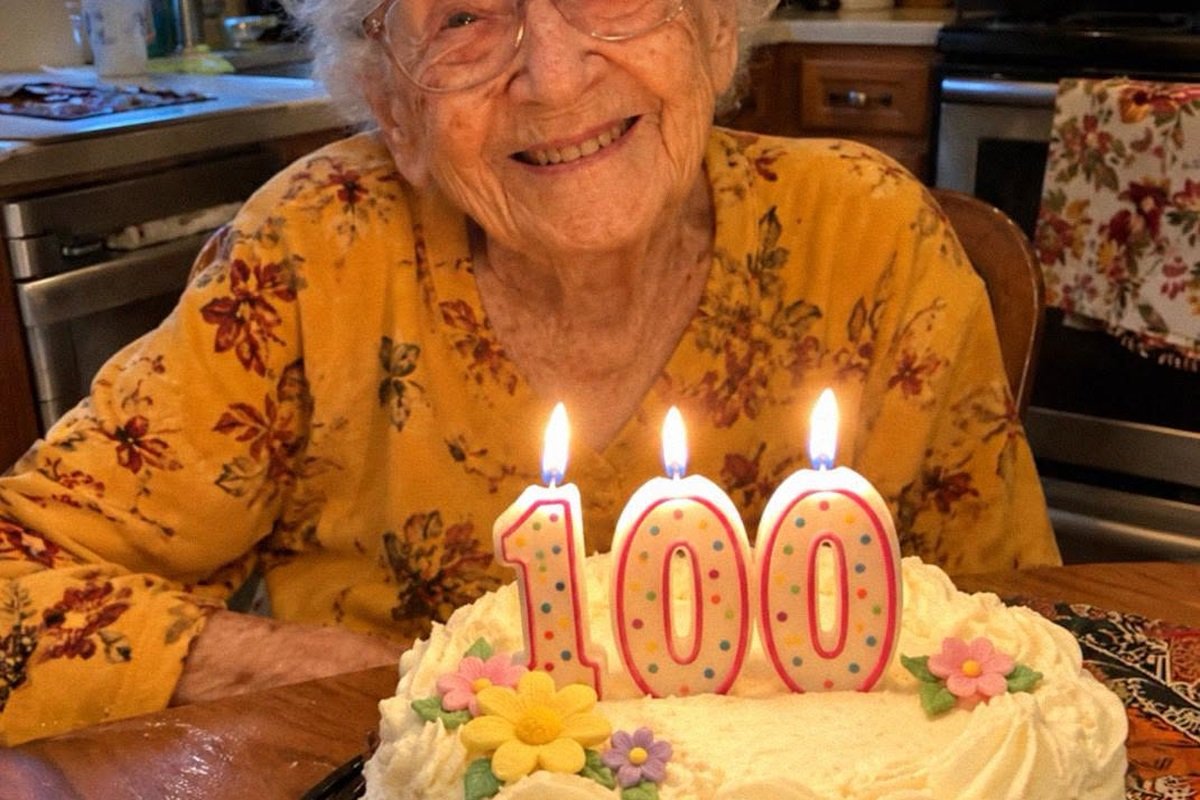
The multi-course dinner progressed smoothly through roasted chicken, sweet potato mash, and warm yeast rolls baked from Evelyn’s handwritten index cards. But as I cleared the dinner plates and returned with the tiered centennial birthday cake adorned with one hundred glowing candles, the atmosphere in the dining room underwent an abrupt, predatory shift. As Grandma blew out the final flickering flame with my gentle assistance, Richard cleared his throat with an authoritative baritone, tapped the rim of his crystal wine glass with a sterling butter knife, and stood up.
‘Now that we’ve honored Mom’s historic milestone,’ Richard began, adjusting the cuffs of his French-cuff shirt with practiced corporate gravitas, ‘we need to take advantage of having all six siblings in the same room to address a matter of urgent practical estate business. We all know that maintaining an aging two-story wood-frame structure in this climate is an untenable burden. Furthermore, we must realistically consider what happens to the property title once Mom is no longer with us.’
A suffocating silence descended over the dining room. I froze near the sideboard, the silver cake knife trembling in my hand. Grandma blinked, her delicate hands resting on the white linen tablecloth, looking up at her eldest son with bewildered hurt. ‘Richard… what are you talking about?’ she murmured softly, her frail voice barely carrying across the table. Before Richard could answer, Brenda leaned forward, her heavy diamond bracelets clinking against her china plate. ‘Let’s be completely transparent, Richard,’ Brenda declared, her tone sharp and assertive. ‘I live in Dallas, but I have the closest commercial ties to this region. My daughter is expecting her second child and needs a solid midwest real estate anchor. Given that I’m the eldest daughter who stayed closest to family traditions, the property deed should naturally transfer to me.’ The cold, unfeeling casualness with which they discussed dividing up her home while she sat breathing at the head of the table hit the room like a slap.
Brenda’s proclamation instantly detonated an explosive storm of familial greed. Donald, the sixty-nine-year-old general contractor, slammed his palms onto the mahogany table, making the fine china rattle. ‘That is absolute nonsense, Brenda!’ Donald snarled, his face reddening with indignant fury. ‘This parcel sits on three-quarters of an acre in an area undergoing rapid commercial gentrification. If we bulldoze this drafty seventy-year-old relic and subdivide the lot into three luxury townhome parcels, we can clear at least nine hundred and fifty thousand dollars in net developer profit! I should handle the demolition and split the proceeds according to capital equity!’
Then my mother, Margaret, chimed in from the opposite end of the table, her voice shrill and accusatory. ‘No one is bulldozing anything without an equal cash payout! Dad built this place for all six of us, not for Donald’s contracting company to take a developer fee! The only equitable solution is an immediate court-ordered probate sale the minute Mom passes, with the escrow balance divided strictly six ways into equal shares!’ Patricia and Gregory joined the fray, shouting over one another about their personal retirement deficits, overdue college tuition for their children, and inflation pressures.
I watched in rising horror as Grandma Evelyn sat paralyzed at the head of the table. A single, heavy tear escaped her pale blue eye, carving a slow path through the deep lines of her hundred-year-old cheek. Her hands gripped the linen napkin in her lap, her knuckles white and trembling. For sixty years, she had starved herself, worn patched winter coats, and scrubbed industrial grease so these six human beings could have a future. And now, on the exact evening meant to celebrate a century of her selfless existence, they were circling her like a pack of starving vultures, dividing up the roof over her head before her heart had even stopped beating.
‘Stop it!’ I yelled, stepping forward to Grandma’s side, my voice ringing off the timbered ceiling beams with furious indignation. ‘Listen to yourselves! Grandma is sitting right here! This is her home! She hand-built this house with Grandpa Arthur! She worked three jobs for thirty years so you could all have degrees and successful lives! How can you stand here on her one-hundredth birthday and argue about who gets to sell her house when she dies?!’
Instead of feeling ashamed, Richard turned his cold, patronizing gaze toward me, dismissing me with a flick of his wrist. ‘Quiet down, Chloe,’ he said condescendingly, as if reprimanding an insolent schoolchild. ‘You’re just a grandchild. You don’t have standing in this discussion. We are Mom’s legal heirs and the children who carry Dad’s bloodline. We are being mature adults planning for inevitable realities. Mom is one hundred years old. She could pass away in her sleep tonight, or next week. If we don’t have an executed agreement on the title transfer right now, the property will get tied up in county probate court and eaten alive by estate taxes. Sit down and let the adults handle legal family affairs.’ Hearing him write off his living mother as a corpse awaiting probate broke something inside me forever.
I looked down at Grandma Evelyn. She looked up at me, her lower lip quivering, but behind the tears in her eyes, I saw an ancient, quiet resolve that matched my own. She gave me a almost imperceptible nod—the signal we had quietly discussed in her kitchen three months prior when we realized that this day might come. Without uttering another syllable, I turned on my heel and walked out of the dining room, stepping into the back hallway that led to Grandma’s sewing room.
In the quiet corner of the sewing room sat Grandpa Arthur’s antique cedar lockbox—a heavy, brass-banded chest he had crafted from aromatic red cedar in 1952, fastened with a solid iron tumbler padlock. For eight years, that chest had held the true, documented history of Willow Creek Lane that none of the six wealthy adult children knew anything about. Because while Richard, Brenda, Donald, Patricia, Gregory, and Margaret were busy enjoying their lake houses and executive bonuses, the reality of Grandma’s home had reached a catastrophic breaking point nearly a decade ago.
Eight years ago, when Evelyn turned ninety-two, a severe winter blizzard caused a massive structural failure in the Craftsman’s north roof gable, sending thousands of gallons of freezing rainwater pouring into the upper bedrooms. Simultaneously, the county municipal board reassessed the gentrifying neighborhood, slapping the property with forty-two thousand dollars in delinquent street-widening and sewage infrastructure liens that had accumulated over fifteen years. With her monthly widow’s pension totaling less than eleven hundred dollars, Evelyn was thirty days away from a court-ordered foreclosure auction by the county sheriff.
In absolute desperation, Grandma had reached out to each of her six children. She sent certified letters and left tearful voicemails explaining that she was facing eviction and homelessness unless they could pool seven thousand dollars each to repair the collapsed roof and settle the county tax lien. The responses she received from her wealthy offspring were chillingly uniform. Richard claimed his capital was locked in illiquid commercial syndicates; Brenda insisted her husband was reorganizing his surgical practice; Donald claimed the construction sector was in recession; Patricia stated her daughters’ private boarding school tuition left her with zero liquidity; Gregory ignored the calls entirely; and my mother Margaret told Grandma she should just surrender the house to the state and move into a subsidized county nursing ward.
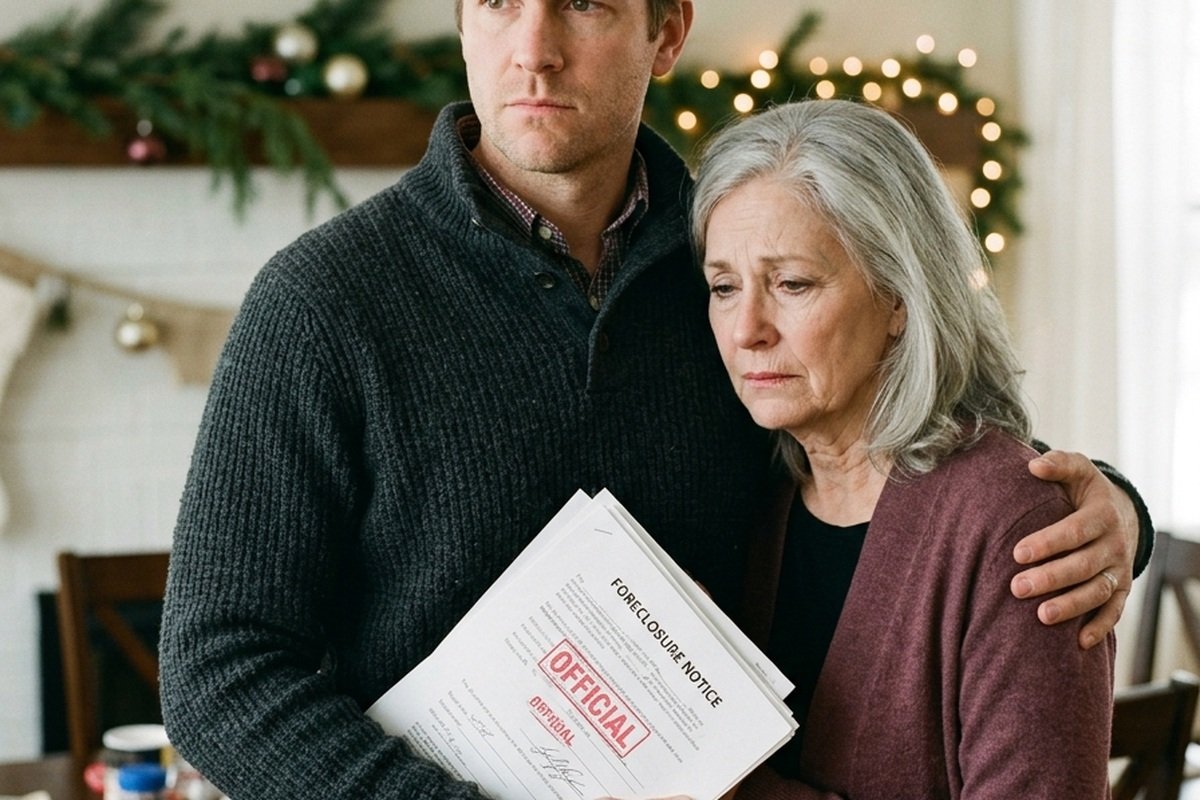
Every single one of her six children had formally abandoned their mother to be thrown into the street. When I discovered Grandma weeping on her damp sofa holding the county foreclosure summons, I took immediate, decisive action. I liquidated my entire inheritance trust from my maternal grandfather, emptied my 401(k) retirement savings, and took out a thirty-thousand-dollar personal municipal credit line. In total, I poured sixty-eight thousand, four hundred dollars of my own hard-earned money into replacing the roof, rewiring the knob-and-tube electrical grid, and personally paying off the delinquent county tax liens at the municipal recorder’s office. To ensure that Grandma could never be threatened again, Evelyn and I retained Judge William Thornton, a renowned estate attorney, to execute a rock-solid, ironclad restructuring of the property title. Now, holding the heavy cedar box in my arms, I walked back toward the dining room.
When I re-entered the dining room, the shouting match between the siblings had reached a fever pitch. Donald was red-faced, pointing a trembling finger at Brenda’s husband, while Richard was drafting handwritten percentages on the back of Evelyn’s linen menu card. The six siblings were so completely engrossed in their feeding frenzy that they barely noticed me approach. Taking a deep breath, I stepped up to the center of the walnut table and slammed Grandpa Arthur’s heavy cedar chest down directly between Richard’s wine glass and Donald’s legal notepad with a deafening, resounding thud.
The wooden plates bounced; silverware clattered against the crystal; and all twenty-two people at the table froze in stunned silence. Richard scowled, staring at the brass-banded chest. ‘What on earth is this, Chloe?’ he demanded irritably. ‘We are in the middle of a serious legal negotiation. Remove this clutter immediately.’ I looked Richard dead in his eyes, feeling a cold, calm power settle into my bones. ‘You wanted to talk about legal reality, Richard? You wanted to know who owns this house the moment Grandma is gone? Open the box.’
Richard hesitated, unnerved by my absolute lack of fear. Donald scoffed, reaching over to pop the brass latches and throw open the heavy cedar lid. Inside, resting beneath Grandpa Arthur’s rail yard pocket watch, was a thick, four-inch legal binder bound in dark green morocco leather, embossed in gold foil with the seal of the county circuit court recorder of deeds. Donald pulled the binder out, opened the cover, and began to skim the top document. Within four seconds, all the arrogant color drained from his face, leaving him looking as white as a hospital sheet.
‘What is it, Don?’ Brenda asked, her voice faltering as she stretched her neck across the table to read over his shoulder. Donald’s hands began to shake so violently that the heavy bond paper rattled like dry autumn leaves. ‘This… this is a recorded Special Warranty Deed and an Irrevocable Living Trust,’ Donald stammered, his throat clicking as he swallowed dryly. ‘Dated October 14th, 2018… recorded with the County Registrar of Deeds… Book 412, Page 88.’
Richard snatched the binder from Donald’s hands, frantically scanning the legal clauses. ‘This can’t be real!’ Richard gasped, his haughty baritone cracking into a high-pitched, panicked squeak. ‘The property was transferred out of Mom’s personal name eight years ago! The owner of record is the *Evelyn & Arthur Vance Heritage Preservation Trust*!’ He flipped to the schedule of beneficiaries and froze, his jaw hanging slack. Beside him, Brenda, Patricia, Gregory, and my mother leaned in, reading the stark legal text printed in undeniable black ink. The silence in the dining room became so profound that the only sound was the rhythmic ticking of Arthur’s pocket watch inside the open box.
I pulled a secondary folder of documents from the chest and spread them across the linen tablecloth for everyone to see. ‘Let me read the terms to you, since you claim to be the mature adults who understand probate law,’ I said, my voice steady, clear, and ringing with moral authority. ‘Eight years ago, this house was thirty days away from being seized by the county sheriff and sold on the courthouse steps for forty-two thousand dollars in delinquent municipal infrastructure liens. Grandma’s roof had collapsed into the attic. She called every single one of you. She begged for your help.’
I pointed directly to six certified mail receipts attached to the tax notices. ‘Here are the certified mail return slips, each stamped *Refused / Return to Sender* by Richard Vance, Brenda Vance-Holloway, Donald Vance, Patricia Vance-Cole, Gregory Vance, and Margaret Vance. Every single one of you refused to spend seven thousand dollars to keep your ninety-two-year-old mother from being thrown into a homeless shelter. You left her to freeze, calculating that if the county auctioned the house, you wouldn’t have to deal with her care.’
Brenda’s mouth opened and closed like a dying fish, while Richard tugged at his collar, sweat beading along his receding hairline. ‘Chloe, that was a misunderstanding,’ Richard tried to bluster, though all authority had vanished from his voice. ‘Market liquidity was tight that quarter—’ ‘Save your lies, Richard,’ I cut him off mercilessly. ‘I paid the sixty-eight thousand, four hundred dollars out of my own life savings. I paid off the county recorder, I hired the structural contractors, and I rebuilt the roof with my own hands alongside the crew. And in return, Grandma and Judge Thornton executed an Irrevocable Living Trust.’
I turned the page in the binder and tapped the bolded operative clause. ‘Under the terms of this recorded trust, Grandma Evelyn holds an absolute, unassailable Life Estate with exclusive possession and control of this property until her final breath. And upon her passing, the title does not pass to probate court, nor does it pass to any of her six children. The title transfers entirely and solely to me, Chloe Vance, as sole trustee and remainder beneficiary.’
A collective gasp tore through the table. ‘You stole our birthright!’ Brenda shrieked, slamming her fists down and knocking over her wine glass, sending red cabernet staining across the white tablecloth. ‘You manipulated a ninety-two-year-old woman into signing away our father’s legacy! This is elder abuse! We will sue you in chancery court and have this fraudulent deed torn to shreds!’ I smiled coldly at my shrieking aunt. ‘Try it, Brenda. Judge Thornton personally videotaped Grandma’s competency evaluation with two independent board-certified geriatric psychiatrists before the deed was notarized. Furthermore, Paragraph Fourteen states that if any biological heir challenges this trust, an immediate statutory clawback is triggered for all college tuition, down payments, and personal loans Grandma provided to you over the past fifty years, totaling over four hundred thousand dollars in audited promissory notes.’
The mention of the four-hundred-thousand-dollar audited clawback promissory notes struck the six siblings like an artillery shell. Donald slumped back into his chair, covering his face with his calloused hands. Richard dropped the binder onto the table, his shoulders rounding as all the bluster drained out of him. Patricia and Gregory avoided looking at each other, while my mother Margaret stared down at her lap in burning, suffocating shame. They had arrived as arrogant corporate titans ready to carve up their mother’s corpse; they sat now as exposed, penniless moral bankrupts before their own children.
Then Grandma Evelyn spoke. Her voice was not loud, but the room was so utterly still that every whisper carried the weight of scripture. She placed her frail, paper-thin hand gently on my wrist, looking around the table at the six human beings she had brought into the world and bled thirty years to raise. ‘Arthur and I gave you our youth, our health, and every dollar we ever made,’ Grandma said softly, her blue eyes clear and steady. ‘We gave you life, and we gave you wings. But you allowed money to rot your hearts until you forgot how to love. Chloe did not steal anything from you. She saved my life when my own children turned their backs on me. This house will never be torn down for townhomes, Donald. It will never be sold for your vanity, Brenda. It belongs to the only person who remembered that love is an action, not an inheritance.’
Without another word, Grandma picked up her small sterling cake fork and took a gentle bite of her birthday cake. One by one, the adult children realized that their reign of entitlement had reached its absolute end. Richard was the first to stand up, silently retrieving his coat and walking out into the autumn night without looking back. Brenda gathered her purse in mortified silence, fleeing down the front porch steps followed by Donald, Patricia, Gregory, and Margaret. Within fifteen minutes, the fleet of luxury SUVs had cleared the gravel driveway, leaving Willow Creek Lane in peaceful, unbroken stillness.
The only people remaining in the dining room were Grandma Evelyn, my husband, our four-year-old daughter Lily, and me. Together, we cleared the remaining dinner plates, laughing as Lily smeared vanilla frosting on Grandma’s nose. We lit a warm fire in Grandpa Arthur’s river stone fireplace, the cedar logs crackling and filling the parlor with the comforting scent of home. As Grandma sat in her favorite floral armchair, holding Lily asleep against her chest and watching the dancing orange flames, she looked up at me with a serene, radiant smile.
‘Arthur would be so proud of you, Chloe,’ Grandma whispered, squeezing my fingers with surprising warmth. ‘The house is safe. Our family’s dignity is safe.’ Looking at her peaceful face, I knew that true legacy is never measured in real estate square footage or bank balances; it is measured in the sacred courage to protect those who gave us everything, and the unbreakable boundaries that keep greed forever outside our doors.