I am eighty-five years old, and for fifty-eight glorious, unrepeatable years, Margaret was the compass by which I navigated every breath of my existence. We met in the golden autumn of 1965 at a municipal transit planning lecture in Ann Arbor. I was a young, dirt-poor civil engineering apprentice with industrial grease permanently stained beneath my fingernails and a well-worn Keuffel & Esser slide rule tucked into my shirt pocket; Margaret was a junior high school mathematics teacher whose quiet, luminous smile made the crowded lecture hall vanish into thin air. We married that winter during a blinding Michigan blizzard in her parents’ small front parlor, exchanging two plain sterling silver bands that cost fourteen dollars each at a local pawnshop, and promised before God that whatever hardships this world threw at our feet, we would face them as an unbreakable, indivisible team.
In those post-war decades, young couples did not expect instant luxury on demand. We lived in a drafty two-room converted garage apartment behind a metal fabrication shop, surviving on cabbage soup, day-old bakery bread, black coffee, and sixty-hour workweeks that tested our physical and emotional endurance. Every single Friday evening, after the children were tucked into their bunk beds, Margaret sat at our chipped Formica kitchen table with a clothbound green ledger book and three recycled tin coffee cans labeled *’Rent,’ ‘Food,’* and *’Tomorrow.’* Long before computerized credit scores and revolving home equity credit lines became ubiquitous, Margaret practiced an almost monastic financial discipline. If a dollar wasn’t strictly necessary for our family’s biological survival, it was deposited directly into our conservative municipal index funds or our local municipal utility credit union. We drove eight-year-old station wagons until the floorboards rusted through, mended our winter coats with heavy nylon thread, and packed brown-bag peanut butter sandwiches for thirty-five consecutive years.
Our decades of relentless sacrifice had a single, sacred objective: we wanted our three children—Graham, Phoebe, and Julian—to have the effortless, debt-free start in life that Margaret and I were so brutally denied during the hard times of our youth. We paid every single cent of their four-year university tuitions out of our own pockets so they would never be burdened by student loan debt. When Graham entered private law school at Northwestern, we liquidated our second mortgage on the house to pay his semester fees without batting an eye; when Phoebe married her corporate investment banker husband, we financed a lavish two-hundred-guest garden reception at the historic country inn; and when Julian’s first two entrepreneurial retail ventures failed in his mid-twenties, we quietly absorbed his thirty-five-thousand-dollar supplier debts so his personal credit rating remained completely immaculate.
Yet despite our austere lifestyle, Margaret had one playful, affectionate vice that brought warmth to our quiet winter evenings. Every Sunday morning after church, while the roast chicken simmered in the oven, she would brew a pot of French roast coffee, spread the thick Sunday newspaper automobile section across the dining table, and point with a delighted grin to the glossy full-page advertisements for British luxury grand tourers—specifically the gleaming, handcrafted British Racing Green grand tourers with polished walnut dashboards, chrome wire wheels, and butter-soft cream leather upholstery. She would lean her head against my shoulder, tap the picture with her reading glasses, and tease me with that sparkling, conspiratorial glint in her hazel eyes: *’One day, Harold. When our three babies are all settled in their careers and we’re young and reckless again, we’re going to buy one of those green beauties and drive all the way down the Pacific Coast Highway without looking at a roadmap.’* We both laughed, knowing it was an impossible fantasy; dental bills, college textbooks, and future family security always had to come first.
Then, ninety days ago, Margaret’s fragile heart finally gave out in her sleep on a rainy Thursday morning. The deafening, suffocating silence that settled over our four-bedroom brick colonial was so heavy, so agonizing, that it felt as though all the oxygen had been permanently siphoned from the atmosphere. I kept the living room television running twenty-four hours a day on low volume simply to hear the murmur of human voices, unable to bear the hollow void where Margaret’s gentle laughter, soft humming, and clinking teacups had lived for six decades. I believed with all my heart that her church memorial service would be the most excruciating trial of my life. I was wrong. The true nightmare began the moment I stood behind the floral wreaths near her open casket.
To the two hundred mourners who filled St. Jude’s Episcopal Chapel for Margaret’s memorial service, our family appeared to be the picture of devoted, dignified solidarity. Graham, now fifty-six and a polished senior corporate vice president in downtown Chicago, stood near the sanctuary entrance greeting municipal officials and former engineering colleagues with solemn, practiced grace. Phoebe, fifty-three and an immaculately groomed suburban socialite wrapped in designer mourning cashmere, tearfully distributed embossed memorial prayer cards to our lifelong neighbors. Julian, fifty, fussed over my coat collar and held my elbow whenever church elders approached, projecting the public image of an attentive, doting youngest son. They received endless praise from our community for the ‘loving, noble, God-fearing family Harold and Margaret had built through selflessness.’
However, fifteen minutes before the chapel doors were scheduled to open for the private family viewing, I felt overwhelmed by the suffocating scent of funeral carnations and stepped behind the towering floral wreaths near the velvet choir drapery to wipe my eyes with my handkerchief. That was when I heard three familiar voices whispering from the recessed alcove directly beside Margaret’s open mahogany casket. It was my three children. But they were not weeping. They were not sharing tender childhood memories of the mother who had spent her youth patching their jeans, tutoring their algebra, and sacrificing her own health so they could prosper. They were conducting a cold, predatory, forensic business audit over her corpse.
‘Listen to me, both of you,’ Graham whispered in a sharp, urgent hiss, glancing nervously toward the empty center aisle before leaning closer to the casket. ‘The suburban residential real estate market in this township has reached its absolute peak. Dad’s four-bedroom brick colonial sits on nearly three-quarters of an acre of prime residential land. It’s worth at least eight hundred and fifty thousand dollars in today’s inventory-starved market. If we list the property by the end of next month, we can clear nearly two hundred and eighty thousand each after municipal transfer taxes and standard commissions.’
‘What about Dad?’ Phoebe replied, her tone devoid of any filial tenderness, dripping instead with cold, calculating pragmatism. ‘He’s eighty-five years old, Graham. He can’t maintain a two-story home with steep hardwood stairs, a slate roof, and a half-acre lawn. My tennis partner’s mother just moved into Whispering Pines Assisted Living over on Route 9. A one-bedroom memory-support suite runs about four thousand two hundred a month. If we have Dad sign over his durable power of attorney to you next week, his state civil engineering pension and Social Security easily cover the monthly facility fees. We wouldn’t have to touch a single penny of the principal estate balance.’
Then Julian chimed in with a greedy, low chuckle that turned my stomach to liquid lead. ‘And don’t forget Dad’s Fidelity retirement portfolio. Mom let slip last Thanksgiving that their conservative mutual funds have been compounding untouched for over thirty-five years. There’s at least one point two million in liquid equities and municipal bonds sitting in that joint family trust. We divide the liquid cash three ways the minute the probate letters of administration are issued by the county court. I’ve got a commercial mezzanine development loan due in late November that this inheritance will wipe out completely.’ Standing ten feet away behind the funeral lilies, staring at the peaceful, waxy face of my late wife, I felt a violent wave of nausea so profound that I had to grip the wooden choir railing to keep my knees from buckling. My children were not mourning their mother; they were measuring her casket like a butcher dividing up a side of beef.
For Margaret’s sacred memory, I forced myself to remain silent throughout the church service, the graveside committal, and the reception that followed at the community hall. I refused to desecrate her final earthly farewell with an ugly, public brawl. But as the funeral hearse drove away and the heavy iron cemetery gates swung shut, the illusion of family loyalty that Margaret and I had spent half a century nurturing died forever in that wet Indiana soil. I did not forget their words. I etched them into my memory with acid.
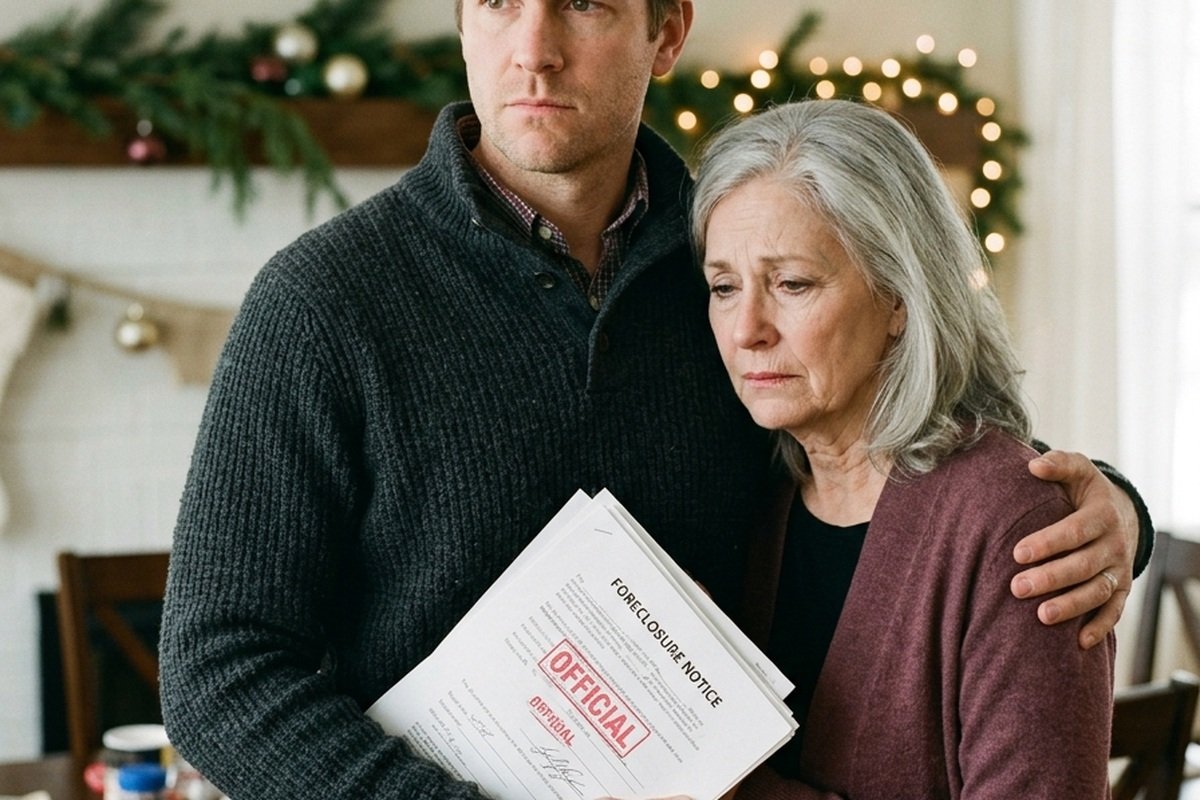
Sure enough, their predatory campaign commenced with chilling, military precision exactly fourteen days after Margaret was buried. Graham arrived at my house on a rainy Tuesday evening carrying an expensive leather briefcase, casually inquiring about the location of the bank safe deposit box keys and asking if I had updated my last will and testament to account for Margaret’s death. ‘We just want to ensure your financial affairs are in order, Dad,’ Graham offered with a patronizing pat on my shoulder. ‘At your age, cognitive decline can happen overnight. It’s much safer for the family assets if we establish a conservatorship now.’
Four days later, Phoebe dropped by with a glossy stack of marketing brochures for Whispering Pines Assisted Living. She wandered through the rooms with an appraiser’s critical eye, tapping on the vintage oak trim and muttering about how an estate liquidation firm could empty the antique furniture in forty-eight hours so a painting crew could neutralize the colors for a weekend open house. ‘You’re so isolated out here all by yourself, Dad,’ Phoebe said, smiling with that plastic, artificial sweetness that masked her greed. ‘You’d have so many scheduled card games at Whispering Pines! And think of the relief of not having to worry about heating bills or raking leaves!’
Then Julian called on Sunday afternoon, outright suggesting that we list the home immediately while interest rates were favorable, offering to ‘manage the escrow proceeds’ through his private boutique investment brokerage firm in exchange for a nominal advisory fee. In all those conversations, across three separate weeks of visits, phone calls, and unsolicited advice, not one of my children asked how I was eating. Not one asked if I was sleeping through the cold nights. Not one offered to sit with me on the porch and look through Margaret’s old photo albums, or brought me a simple bowl of warm chicken soup. Their sole, unwavering, laser-focused concern was the liquidation and distribution of our accumulated wealth.
That Sunday night, after Julian’s phone call ended, I sat alone in Margaret’s favorite floral wingback chair by the bay window. Resting on the mahogany side table was our framed 1965 wedding photograph and the yellowed newspaper clipping of that British Racing Green luxury grand tourer she had playfully teased me about for four decades. In the quiet darkness of the empty house, I heard her sweet, mocking voice whispering in my ear with unmistakable clarity: *’When we’re young and reckless again, Harold.’* Looking at the darkened rooms, I realized with crystalline, unshakeable certainty: Margaret and I had spent fifty-eight years saving for tomorrow. But tomorrow had arrived; Margaret was gone; and the tomorrow our children envisioned was locking me away in an assisted living warehouse so they could burn through our life’s blood on luxury country club memberships, commercial real estate gambles, and designer clothes. I decided right then and there that it was time for Harold Sterling to become reckless.
On Tuesday morning at nine o’clock sharp, I took a taxi to the downtown headquarters of First National Trust. Because Margaret and I had established our joint accounts under full rights of survivorship, the entire estate—the index funds, municipal bonds, and cash reserves totaling two million, one hundred and forty thousand dollars—had transferred smoothly and solely into my name without requiring probate court intervention. When my private banking advisor, Arthur Vance-Sterling, inquired whether I wanted to roll the balances into structured beneficiary sub-trusts for Graham, Phoebe, and Julian, I looked him dead in the eye and said, ‘Arthur, cancel every existing beneficiary designation on every single account. I have an entirely different plan for Margaret’s legacy.’
Over the next three days, with the meticulous precision of a veteran civil engineer who had spent forty years designing load-bearing interstate bridges, I executed a series of irreversible financial transactions. First, I had Arthur draft an irrevocable charitable endowment deed naming the *Margaret Vance Pediatric Cardiac Research Foundation* at the state children’s hospital as the sole primary beneficiary of ninety percent of our residual liquid assets upon my death. The endowment was structured with an absolute, ironclad forfeiture clause: if any biological heir attempted to challenge the bequest in probate or chancery court, the remaining ten percent would immediately divert to the municipal animal rescue league, leaving the contestants with exactly zero dollars.
Next, I took a thirty-minute taxi ride to the premier luxury automotive dealership in the northern suburbs. Standing on the pristine showroom floor was a brand-new, bespoke 2025 British Racing Green luxury grand touring sedan—hand-stitched cream Connolly leather, hand-rubbed walnut wood veneers, a twin-turbocharged high-performance engine, and the exact timeless silhouette Margaret and I had admired in the Sunday papers for decades. The total price tag, including expedited delivery, luxury excise taxes, and an extended lifetime concierge service warranty, came to exactly one hundred and sixty-eight thousand dollars.
I didn’t finance a dime. I wrote a certified bank cashier’s check from my personal checking account, signed the title exclusively in the name of *The Harold & Margaret Living Trust*, and instructed the general manager to deliver the vehicle to my driveway on Saturday morning at ten o’clock sharp. Finally, I stopped at a high-end luxury travel agency downtown and booked a thirty-day, five-star private first-class cruise through the Norwegian Fjords—a journey Margaret had pinned to our refrigerator corkboard for twenty-five years—with a private balcony stateroom, gourmet dining package, and personal shore excursions, departing in mid-November.
For the first time in fifty-eight years of austere penny-pinching, I had spent our hard-earned money on ourselves—or rather, on Margaret’s sacred memory and my own unfulfilled dreams. Because my children had established automated electronic transaction alerts on our joint banking portal back when Margaret was sick under the guise of ‘helping with bookkeeping,’ the hundred-and-sixty-eight-thousand-dollar debit triggered an immediate high-priority notification to Graham’s smartphone in Chicago. Within ninety minutes, Graham had alerted Phoebe and Julian. The stage was set for their final, shameless ambush.
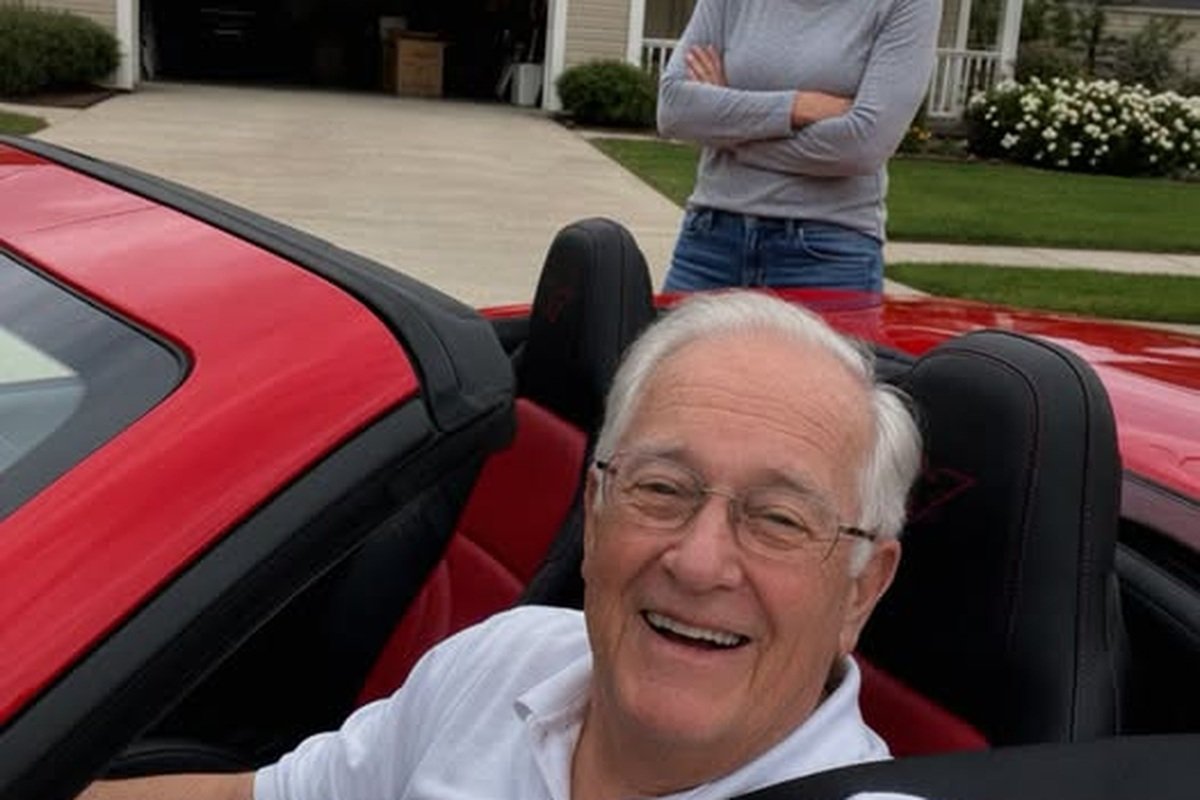
Saturday morning arrived with breathtaking autumn clarity. The sun shone bright through the red maple trees, and at ten sharp, an enclosed flatbed transport carrier pulled up to my curb. The dealership driver carefully rolled the gleaming British Racing Green grand tourer down the ramps and parked it neatly in my paved driveway. The polished chrome sparkled like liquid silver; the rich aroma of fresh Connolly leather wafted through the open driver’s window; and the deep, refined rumble of the exhaust filled the quiet suburban cul-de-sac with pure power. I stood on the front porch with a mug of fresh coffee, running my fingers over the polished green fender, tears of sweet, bittersweet closure welling in my eyes. ‘We did it, Maggie,’ I whispered to the autumn breeze. ‘Your green beauty is finally home.’
Not fifteen minutes later, three cars screeched into my driveway, blocking the street and nearly clipping my mailbox. Graham, Phoebe, and Julian spilled out of their vehicles like an enraged strike team, their faces flushed purple with fury. Graham was waving a crumpled printout of the bank transaction alert; Phoebe was clutching her designer handbag, sobbing with theatrical hysteria; and Julian was stomping up the driveway with his fists balled at his sides, veins pulsing along his neck.
‘Dad! Have you completely lost your mind?!’ Graham roared, marching up the driveway steps, pointing an accusing finger at the green grand tourer. ‘One hundred and sixty-eight thousand dollars?! What kind of demented, senile impulse purchase is this?! Did some predatory car salesman take advantage of your grief and scam you into this?! We are calling First National Trust right this second to have this fraudulent transaction frozen for complete lack of testamentary and mental capacity!’
Phoebe stepped onto the porch, wiping her running mascara with a lace handkerchief, her voice screeching in high-pitched indignation. ‘How could you do this to us, Dad?! That money was our inheritance! That was supposed to be our financial security! Mom spent her entire life pinching pennies, clipping coupons from the circulars, and wearing twenty-dollar shoes so that we would be taken care of! Mom is rolling in her grave right now at Oakridge Cemetery watching you squander our family’s birthright on an obscene midlife crisis toy at eighty-five years old!’
Then Julian stepped up, shouting directly into my face from two feet away: ‘You spent our inheritance on a luxury car?! Our inheritance?!’ I stood tall on the wooden porch, looking down at my three adult children with cold, unyielding disgust. ‘Your inheritance?’ I asked quietly, my voice barely above a whisper. Julian sneered with pure entitlement, ‘You know exactly what I mean! That money was earned by this family! You had no moral right to touch it without calling a family meeting!’ I took a slow sip of my coffee, looked at them for five agonizing seconds, and said, ‘Come inside. All three of you. Let’s sit down in the dining room and discuss your mother’s wishes.’
The three siblings marched into the dining room, looking around with predatory satisfaction, utterly convinced that their united aggression had broken their eighty-five-year-old father’s spirit. They sat at the long mahogany dining table where Margaret had served them Sunday roasts and holiday turkeys for four decades. I walked calmly over to the mahogany corner cabinet, retrieved a small black digital Olympus voice recorder, and set it down in the exact center of the table directly between Graham’s legal printout and Phoebe’s handbag.
Phoebe frowned, dabbing at her nose. ‘What is that, Dad? An audio codicil?’ ‘No, Phoebe,’ I replied calmly, taking my seat at the head of the table. ‘This is an audio recording from your mother’s memorial service three months ago. You see, the chapel sound engineer had wired a wireless lapel microphone into the floral wreaths beside Margaret’s open casket so the overseas mourners in England could hear the service. The system was recording thirty minutes before the service started. Let’s listen together to what Mom’s loving children had to say while standing over her body.’
I pressed the play button. The crystal-clear, high-definition audio filled the dining room with absolute fidelity. Graham’s voice rang out first through the speaker: *’Dad’s four-bedroom lot alone is worth at least eight hundred and fifty thousand… clear nearly two hundred and eighty thousand each after commissions.’* Then Phoebe’s sharp, calculating tone: *’Whispering Pines Assisted Living on Route 9… four grand a month… Dad’s pension covers it, we don’t have to touch the estate balance.’* Followed by Julian’s greedy chuckle: *’At least one point two million in liquid equities… divide the cash three ways the minute probate letters are issued… wipes out my loan.’*
The color vanished from Graham’s face as if he had been struck in the chest by an artillery shell. Phoebe’s mouth dropped open in horrified paralysis, her theatrical tears drying instantly. Julian took an involuntary step back, clutching his chest, his eyes wide with absolute dread. The silence in the dining room was so profound that you could hear the antique grandfather clock ticking in the hallway with brutal clarity.
‘You stood beside your mother’s open casket,’ I said, my voice cutting through the room like a surgical scalpel, ‘before her body was even placed in the ground, and you calculated how quickly you could lock me in an assisted living warehouse and butcher our home for cash. Not one of you shed a genuine tear for Margaret. You saw her death as an ATM withdrawal.’ I pulled a second legal document from my folder and slid it across the mahogany table. ‘Here is my updated estate plan, executed on Thursday. Ninety percent of my estate—two million dollars—has been placed into an irrevocable charitable trust for pediatric heart disease research in Margaret’s name. The three of you are left with exactly one dollar each. And if you attempt to challenge my testamentary capacity in probate court, this audio recording will be introduced as Exhibit A in open court, accompanied by public press releases sent to your corporate board, Graham, your country club committee, Phoebe, and your commercial creditors, Julian.’
Graham stared down at the recorded trust agreement, his hands trembling so violently that he couldn’t even pick up the paper. He tried to speak, but only a pathetic, choked whimper escaped his throat. ‘Dad… please… you have to understand… we were under enormous stress that morning… we didn’t mean it that way…’ ‘You meant every single word, Graham,’ I replied, standing up and pointing toward the front door. ‘You are three entitled, ungrateful strangers whom Margaret and I spoiled until you lost your humanity. Get out of my house. And do not ever contact me again unless it is through my attorney.’
One by one, completely broken and exposed in their naked greed, my children gathered their belongings and walked out the front door in total, suffocating shame. As their cars backed out of my driveway and sped away into the afternoon, an overwhelming sense of profound peace settled over my soul. For fifty-eight years, Margaret and I had carried the heavy burden of protecting them, believing that unconditional sacrifice was the only measure of parenthood. But real dignity requires boundaries, and real love never allows itself to be devoured by vultures.
Ten minutes later, I walked down the porch steps, clicked the remote key of the British Racing Green grand tourer, and opened the driver’s door. The supple cream leather enveloped me in luxurious warmth. I inserted the key, pressed the starter button, and listened to the glorious, deep growl of the twin-turbocharged engine roar to life. I rested Margaret’s framed photograph on the passenger seat beside me, adjusting her seatbelt with a gentle click.
I pulled out of the driveway and steered the green grand tourer toward the open highway, heading north toward the lake shore. As the autumn wind rushed through the slightly lowered window and the afternoon sunlight bathed the polished walnut dashboard in golden warmth, I looked at Margaret’s smiling face in the frame beside me.
‘We’re young and reckless now, Maggie,’ I said aloud, my heart lighter than it had been in thirty years. ‘And we’ve got the whole open road ahead of us.’ For the first time since she closed her eyes, I didn’t feel alone. She was right there with me, riding in the passenger seat of our dream, leaving the petty greed of the world far behind in our rearview mirror.