In the Hill Country of central Texas, men like my grandfather Henry Callahan do not grow soft with age.
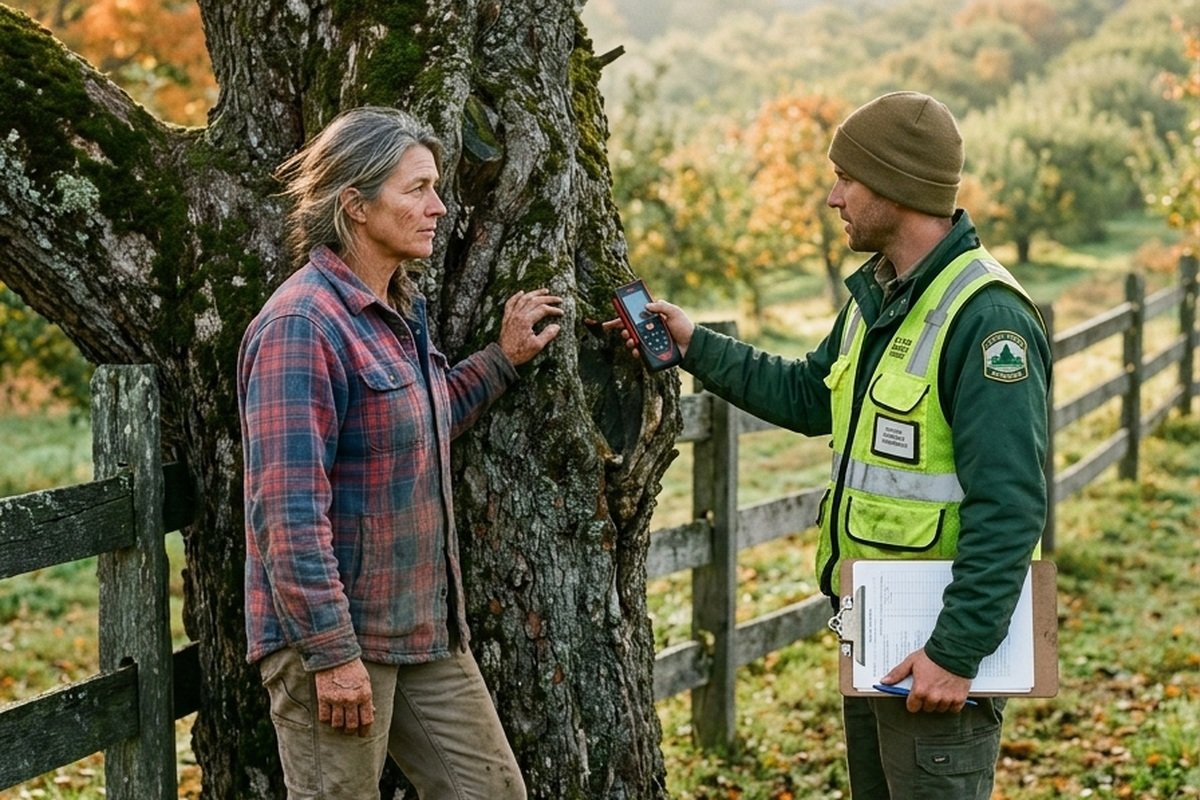
At seventy-eight years old, Henry still woke up at five o’clock every morning, saddled his quarter horse, and rode the fence lines of ‘Silver Creek Ranch’—four hundred sprawling acres of live oaks, natural limestone springs, and prime cattle grazing pasture that had been in our family since 1918.
Henry was a retired petroleum engineer and third-generation rancher.
His hands were like tanned leather, his blue eyes were as sharp as an osprey’s, and his mental arithmetic was faster than any spreadsheet.
He lived alone in the original stone ranch house after my grandmother Clara passed away five years ago, cooking his own meals, repairing his own diesel tractors, and managing a seven-figure diversified investment portfolio with handwritten ledger books.
The only thorn in Henry’s side was his eldest son, my uncle Bradley.
Bradley was fifty, slick, perpetually tanned from tanning beds, and operated a failing commercial logistics brokerage in Dallas that was drowning in high-interest business debt.
Bradley viewed our family ranch not as a heritage to be protected, but as an eight-million-dollar suburban subdivision waiting to be bulldozed and sold to Dallas real estate conglomerates.
For two years, Bradley had been pressuring Henry to sign over a durable power of attorney and sell the ranch.
Every time Bradley brought it up, Henry would pour a cup of black coffee and tell him the same thing: “Bradley, this dirt was paid for in blood and sweat. As long as I draw breath, not an acre of Silver Creek will ever be carved into McMansions.”
Frustrated by his father’s unyielding resolve, Bradley decided to fabricate an alternate reality.
Four months ago, Henry came down with a severe bout of viral pneumonia that landed him in the regional hospital in Kerrville for six days.
While Henry was lying in a hospital bed with an IV line, Bradley put his insidious plan into motion.
Bradley hired an unscrupulous, private concierge physician from San Antonio to conduct a fifteen-minute bedside ‘cognitive assessment’ while Henry was heavily sedated on prescription cough suppressants and fever medication.
The physician drafted an evaluation diagnosing Henry with ‘rapidly progressing vascular dementia, profound cognitive impairment, and severe executive incapacity.’
Armed with this fraudulent medical assessment, Bradley filed an emergency ex-parte petition for involuntary adult guardianship and conservatorship in the Kerr County Probate Court.
In his petition, Bradley declared that Henry was wandering the ranch in a state of confusion, leaving gas burners on, and was entirely incapable of managing his personal safety or his estate.
Bradley requested that the court appoint him as sole legal guardian with full authority to commit Henry into a secure, locked-memory-care facility in north Dallas, and grant him immediate conservatorship powers to liquidate the four-hundred-acre ranch to ‘pay for long-term specialized medical care.’
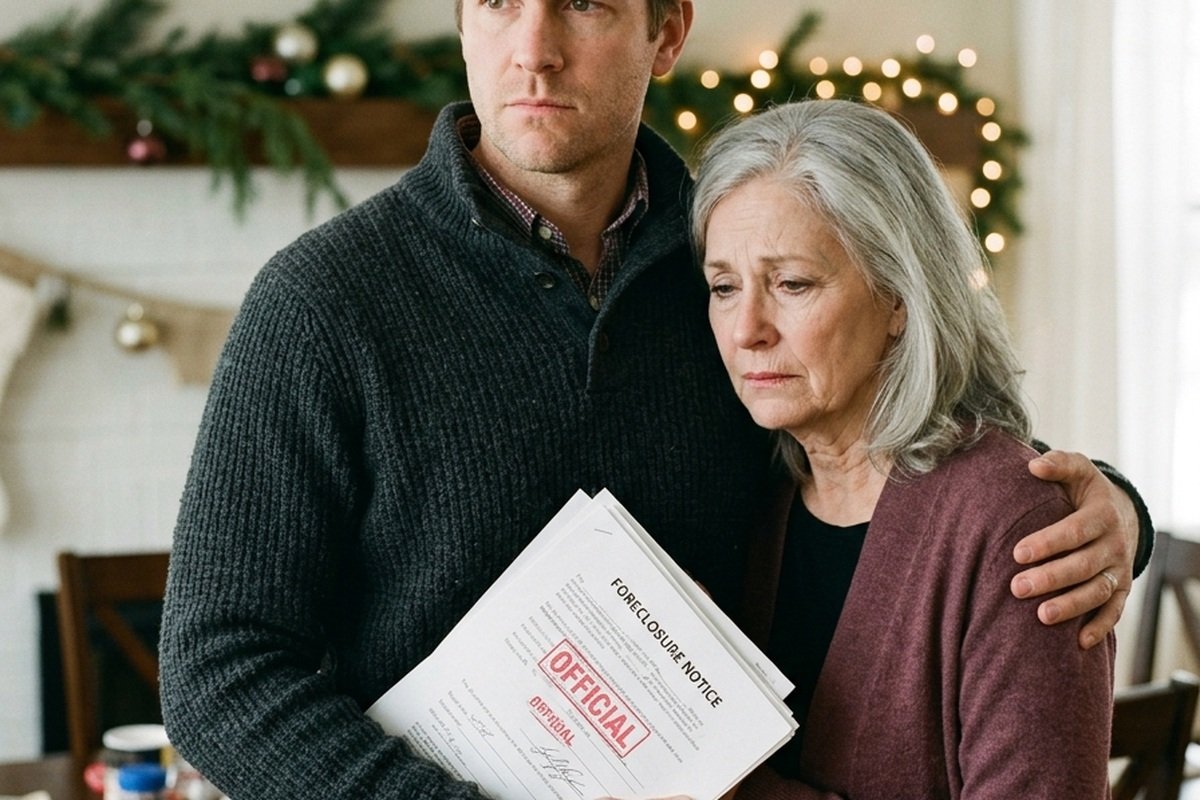
When Henry was discharged from the hospital and returned home to Silver Creek, he found a formal summons nailed to his front door, along with an emergency temporary restraining order freezing his primary bank accounts.
I was twenty-eight, working as an independent land surveyor and managing cattle operations alongside Henry.
When I arrived at the ranch that evening, I found Henry sitting at his kitchen table under the amber glow of the hanging lamp.
He wasn’t panicking. He wasn’t yelling.
He was calmly cleaning his hunting rifle with an oiled cloth, a faint, wry smile playing across his weathered lips.
“Grandpa, Bradley filed for guardianship!” I said, breathless with rage. “He’s trying to declare you incompetent and lock you in a dementia home so he can sell the land to Dallas developers!”
Henry set the cleaning rod down on the wooden table, looked up at me, and chuckled softly.
“Caleb, when you’ve spent fifty years hunting feral hogs in the brush, you learn one basic rule: you never step into a trap without knowing who set it, and you never squeeze the trigger until the target walks into the open.”
Henry stood up and walked over to the antique roll-top desk in the corner of the living room.
He opened a false back panel behind the pigeonhole drawers, revealing a sleek, military-grade digital network video recorder (NVR) connected to a high-speed satellite uplink.
“Three months ago, my tractor keys went missing, and forty thousand dollars vanished from the livestock operating fund,”
“I had a commercial surveillance firm from Austin come out while Bradley was in Dallas. They installed sixteen microscopic 4K night-vision cameras with optical zoom and directional audio mics throughout this house—in the smoke detectors, the crown molding, and behind the bookshelf facing my safe.”
“Let’s take a look at what my loving son has been up to while his old man was supposedly losing his mind.”
Henry opened his laptop and queued the recordings.
What we watched over the next three hours was breathtaking in its sociopathic audacity.
On the night before Henry was hospitalized with pneumonia, the camera in the kitchen clearly showed Bradley sneaking into the ranch house at midnight.
The camera recorded Bradley deliberately turning on two unlit gas burners on the kitchen stove, letting propane hiss into the room to create the illusion of a confused, forgetful old man leaving gas on.
Then, the hidden camera inside the study showed Bradley prying open the floorboards beneath the desk, using a forged duplicate key to open Henry’s personal fireproof safe, and stealing sixty thousand dollars in cash reserves and two registered land deeds.
Most incriminating of all was an audio recording from the master bedroom.
Bradley was pacing the floor on his speakerphone with his commercial broker in Dallas, laughing loudly:
“The old man has pneumonia. I’ve got Dr. Mercer in my pocket to sign the dementia evaluation tomorrow morning. Once the judge grants emergency guardianship, I’ll have him locked in the memory ward by Friday, and we can sign the preliminary land purchase agreement with the development syndicate by the end of the month. He won’t even know what hit him.”
I stared at the screen, my blood boiling with fury.
“Grandpa, we have to call the Texas Rangers right now!”
Henry placed a heavy, calloused hand on my shoulder.
“Patience, son. If we arrest him tonight, his Dallas lawyers will bail him out on bond and claim the video is doctored. We let him walk into the courtroom in front of Judge Abernathy. We let him put his hand on the Bible, swear an oath before God and the state of Texas, and perjure himself into a federal penitentiary.”
Henry hired Samuel Houston Blackwood, the most feared trial attorney in the Texas Hill Country.
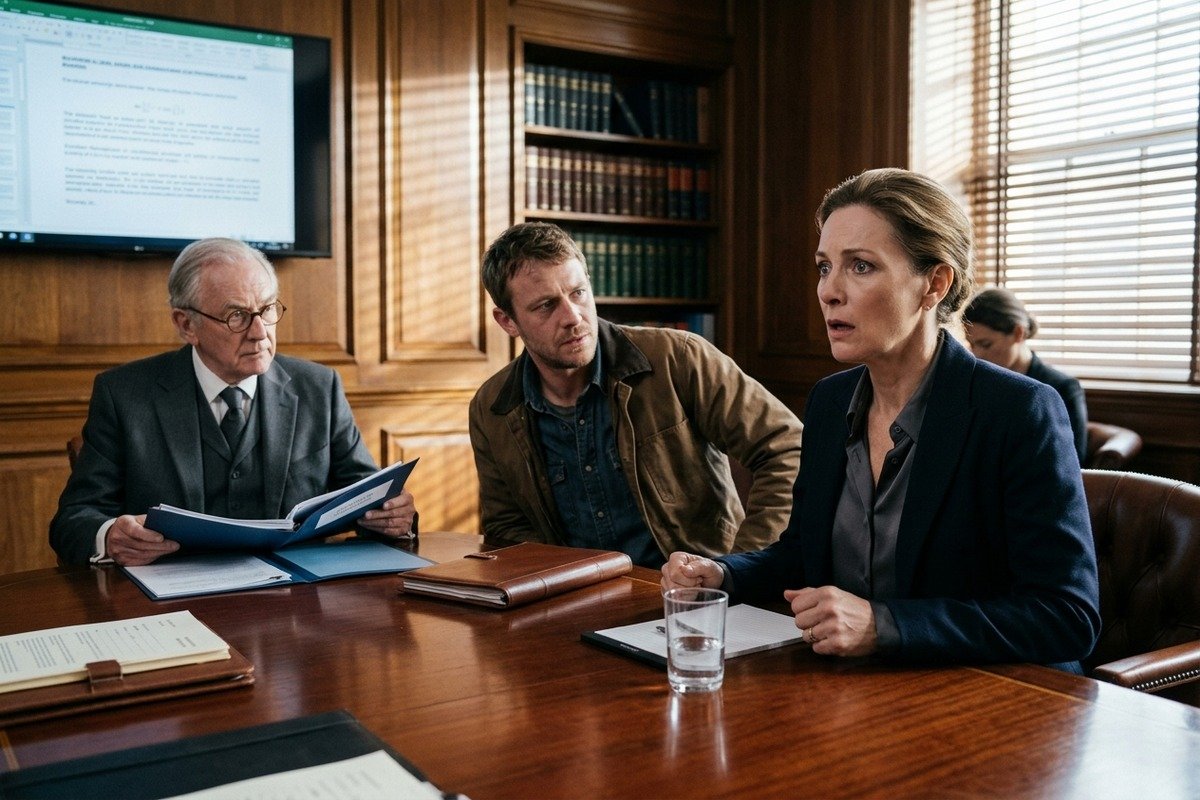
Two weeks later, the Kerr County Probate Courtroom was packed for the emergency guardianship hearing.
Bradley sat at the petitioner’s table wearing a sharp charcoal suit, playing the role of the heartbroken, dutiful son to perfection.
He wiped away pretend tears with a handkerchief, testifying before Judge Abernathy that his poor, confused father was a danger to himself, that the ranch had fallen into squalor, and that putting Henry into a luxury memory-care facility was an act of filial mercy.
His crooked concierge doctor took the stand, testifying with clinical gravity that Henry Callahan scored an 11 out of 30 on the Montreal Cognitive Assessment and had irreversible neurodegenerative decline.
Judge Abernathy, a no-nonsense jurist who had known our family for thirty years, looked down with sorrowful eyes.
“Mr. Blackwood, does the respondent wish to present any medical counter-testimony?”
Samuel Blackwood stood up, buttoning his coat.
“Your Honor, we do not require medical experts to demonstrate Henry Callahan’s mental acuity. We have something far more definitive: primary documentary evidence.”
Blackwood walked to the clerk’s station, plugged an encrypted solid-state drive into the courtroom presentation podium, and dimmed the lights.
On the seventy-inch courtroom wall display, the high-definition surveillance footage lit up the room.
The courtroom was completely silent except for the sound of Bradley’s own voice booming through the speakers:
“Once the judge grants emergency guardianship, I’ll have him locked in the memory ward by Friday, and we can sign the preliminary land purchase agreement…”
Then came the crystal-clear night-vision video of Bradley turning on the unlit gas burners on Henry’s stove, followed by the footage of him looting the floorboard safe.
The transformation in the courtroom was electric.
Bradley’s face drained of all color, turning a sickening, ash-gray. He began to hyperventilate, clutching the edge of the counsel table as sweat dripped from his chin onto his paperwork.
His high-priced Dallas lawyer frantically stood up, stammering:
“Your Honor… objection! This is unauthorized… we request an immediate recess!”
Judge Abernathy slammed her wooden gavel down with a thunderous crack that shook the courtroom bench.
“Sit down, counselor, before I hold you in contempt!” Judge Abernathy roared, her face flushed with fury.
She glared at Bradley with scorching, unvarnished disgust.
“In thirty-five years on the bench, I have never witnessed an act of elder abuse, perjury, and attempted grand larceny as despicable and depraved as what has just been presented in this court.”
Judge Abernathy didn’t just dismiss Bradley’s guardianship petition with prejudice.
She immediately signed an emergency court order directing the bailiff and two armed county deputies to place Bradley in handcuffs on the spot.
Bradley was arrested inside the courtroom and booked on multiple felony counts:
1. Exploitation of an elderly individual (First-Degree Felony under Texas Penal Code § 32.53).
2. Aggravated perjury before a court of law.
3. Reckless endangerment of property by gas tampering.
4. Felony theft of property over $30,000.
The crooked concierge doctor, Dr. Mercer, was immediately referred to the Texas Medical Board and the state attorney general’s office for criminal medical fraud and conspiracy, resulting in the permanent revocation of his medical license within sixty days.
Bradley spent four months in the county jail awaiting trial before entering a comprehensive plea agreement.
He was sentenced to eight years in the Texas Department of Criminal Justice, stripped of all inheritance rights under the Texas Slayer and Elder Abuse Statutes, and ordered to pay $140,000 in restitution and legal fees.
Standing on the courthouse steps after the sentencing hearing, Henry Callahan adjusted his Stetson hat against the bright Texas sun, took a deep breath of fresh Hill Country air, and looked out over the town square.
The formal investigation conducted by the Texas Rangers Financial Crimes Division unearthed a mountain of premeditated conspiracy that went far beyond what was captured on the ranch security cameras.
Subpoenaed bank records revealed that Bradley had accumulated over four hundred thousand dollars in gambling debts at high-stakes underground poker clubs in Fort Worth.
He had already accepted an illicit hundred-thousand-dollar cash advance from a predatory private equity land syndicator, signing a non-binding letter of intent to deliver the Silver Creek mineral and water rights the moment Henry was declared incapacitated.
During his interrogation by Texas Ranger Sergeant Travis Vance, Dr. Mercer broke down in tears within forty minutes, admitting that Bradley had promised him a five-percent finder’s fee on the ultimate land sale in exchange for forging the dementia assessment.
The medical board took unprecedented emergency action: Dr. Mercer was stripped of his Texas medical license, barred from practicing medicine in all fifty states, and ordered to stand trial as a co-conspirator in federal wire fraud.
Hearing the extent of the betrayal was a heavy blow for Henry, but he refused to let bitterness take root in his spirit.
‘Caleb,’ he told me as we repaired a cedar pasture fence the following Saturday, ‘a man who spends his life crying over bad blood will never have the strength to plant good seed.’
‘Your uncle made his choice. He decided that easy money was worth more than his father’s honor and his family’s land. Now he has eight years in Huntsville to learn the difference between value and price.’
The following month, our neighboring ranchers from across Kerr County organized a massive celebratory barbecue on the Silver Creek grounds.
Over two hundred neighbors, county commissioners, and multi-generational ranching families gathered on the front lawn, bringing smoked brisket, homemade peach cobbler, and fiddle music under the live oaks.
It was a living testament to the enduring power of community, honor, and generational resilience in the face of ruthless greed.
“Caleb,” he said, clapping me on the back with a grip as strong as iron, “let’s go home and check on the cattle.”
Today, Silver Creek Ranch remains untouched, its rolling green pastures stretching as far as the eye can see under the vast Texas sky.
Henry officially executed a permanent conservation easement with the Texas Land Conservancy, ensuring that the four hundred acres can never be subdivided, developed, or destroyed for the next two hundred years.
The trial transcript from that fateful morning in Kerr County has since become mandatory reading in several Texas elder law and probate seminars.
It highlights the critical vulnerability that elderly property owners face when unscrupulous relatives weaponize involuntary guardianship statutes against vulnerable family members.
More importantly, it demonstrates how technological foresight—specifically independent, secure cloud-backed surveillance—can completely dismantle fabricated medical diagnoses and fraudulent testimony.
Judge Abernathy herself commended Henry on the public record, noting that his presence of mind and composure had prevented a gross miscarriage of justice that might have taken years to unravel in appellate courts.
For Henry, however, the greatest victory was not seeing Bradley marched out in handcuffs or watching the corrupt doctor lose his credentials.
The true victory was riding out to the north pasture at sunrise the following week, looking out over the limestone bluffs and the winding ribbon of Silver Creek, knowing that this sacred ground would remain unbroken for generations to come.
As he tipped his hat to the morning sun, he turned to me with that quiet, timeless Texas grin: ‘Caleb, remember this as long as you live: land doesn’t belong to the people who hold the paper; it belongs to the people who give it their heart.’
Family betrayal leaves a unique scar because the wound is inflicted by the very hands that should have offered comfort and support.
In the aftermath of the trial, several distant cousins reached out to offer superficial sympathies, but Henry greeted each message with polite, measured silence.
He understood that when wealth is involved, feigned loyalty is cheap, but steadfast integrity is priceless.
Together, we established the Callahan Ranch Heritage Foundation, an educational nonprofit that hosts high school agricultural apprentices and provides veterinary scholarships to young Texan students.
Turning a near-catastrophe into an enduring force for good was Henry’s ultimate revenge against those who sought to destroy him.
Every evening as the sunset paints the Texas horizon in brilliant shades of amber and violet, I watch Henry sitting on the porch with his boots kicked up, listening to the crickets hum across the pasture.
He didn’t just save a ranch; he preserved the soul of an entire family lineage, proving that an honest life lived with courage is impenetrable to any scheme.
He also amended his family trust, naming me as sole trustee and successor owner.
Whenever people ask me about that courtroom hearing, I always tell them the same thing:
Never underestimate an old man who built his life with his own hands—because wisdom doesn’t age, and wolves always forget that old lions still have teeth.