At four o’clock in the morning, the silence of a bakery kitchen has a sacred rhythm.
For twelve years, my morning began in the dark: the hum of the commercial spiral mixers, the dusting of King Arthur unbleached flour across maple butcher blocks, and the warm, yeasty aroma of sourdough loaves expanding in the stone-hearth deck ovens.
I was twenty-two when I opened ‘Honey & Hearth Bakery’ in a quiet coastal town in Maine.
I hadn’t inherited a single dollar.
I had worked eighty-hour weeks, scrubbed grease traps with chemical burns on my forearms, slept on a folding cot in the storage room between bake shifts, and lived on day-old baguettes to make payroll during the harsh off-season winters.
By our tenth year, Honey & Hearth was a regional institution.
We were featured in regional food magazines, supplied fifteen upscale seaside restaurants, employed twelve full-time staff members with health insurance, and netted $180,000 in clean annual profit with zero debt.
Because my parents had signed as limited secondary guarantors on my very first $30,000 commercial equipment loan in 2012, they held a non-dilutable 51% legal voting equity on the corporate charter—a technicality I had never questioned because I believed family was sacred.
That naive belief destroyed everything I had spent my youth creating.
My younger brother, Julian, was thirty years old, charming, perpetually unemployed, and my mother’s undisputed ‘golden child.’
Julian had dropped out of two colleges, failed at three separate dropshipping businesses that my parents funded, and spent his twenties living in our parents’ guest house driving an imported sports car on their credit cards.
Whenever Julian needed money, my mother would remind the family: “Julian is an executive visionary. He just needs the right platform to showcase his leadership talent.”
Fourteen months ago, during Sunday dinner at my parents’ house, my father cleared his throat and slid a manila folder across the table.
“Clara, we’ve made an executive corporate decision about the future of Honey & Hearth,”
“You have been working too hard for too long. You’re thirty-four, unmarried, and exhausted. It’s time for the business to scale into a national franchise brand.”
“We are appointing Julian as Chief Executive Officer and Managing Director. You will stay on as Head Baker and oversee kitchen production under his strategic direction.”
I dropped my fork. The room went completely silent.
“You’re doing what?” I asked, my voice trembling with disbelief. “Julian has never baked a single loaf of bread in his life. He doesn’t know how to calculate food cost percentages, he’s never managed a staff, and he doesn’t know the difference between active dry yeast and baking powder!”
Julian leaned back in his dining chair, swirling a glass of vintage Pinot Noir with an arrogant, self-satisfied grin.
“Baking bread is manual labor, Clara,” he scoffed. “Any teenager can be trained to pull trays out of an oven. My vision is strategic brand equity, influencer marketing, and high-margin corporate catering.”
“We are opening a second luxury boutique location in Portland, rebranding to an ultra-modern aesthetic, and pivoting into premium lifestyle merchandise.”
My mother chimed in, her voice dripping with guilt-tripping venom.
“Clara, don’t be selfish and territorial. You’ve had the spotlight for twelve years. Your brother deserves an executive opportunity to prove himself to the family. If you truly loved this family, you would support him with an open heart.”
When I refused to sign the revised management agreement, my parents used their 51% corporate voting block to pass an emergency resolution.
They demoted me, stripped me of all banking signature authority, and installed Julian as sole managing director with complete control over all commercial bank accounts.
I had two choices: stay and watch my life’s work get mangled under the commands of an incompetent golden boy, or walk away.
The next morning, I packed my personalized Japanese chef knives, my handwritten recipe binders that had taken a decade to perfect, and my personal chef coat.
I handed my keys to the store manager, looked Julian in the eyes, and gave him one sentence:
“The kitchen never lies, Julian. You can’t charm a deck oven.”
What followed was a nine-month masterclass in catastrophic business mismanagement.
Julian immediately fired my veteran kitchen manager and head pastry chef because they dared to tell him that his proposed menu changes were economically unviable.
He took out a $250,000 high-interest commercial expansion loan and leased a $7,000-a-month retail space in downtown Portland that required a $150,000 custom buildout.
He spent $40,000 on a corporate rebranding agency that changed our beloved, warm ‘Honey & Hearth’ name to a cold, sterile moniker called ‘L’Épi Noir’ with a minimalist black-and-gray logo.
He replaced our local organic grain suppliers with cheap commercial frozen dough mixes to ‘improve margins,’ while raising prices by forty percent.
Within ninety days, our twelve-year loyal customer base rebelled.
Long-time patrons took their morning coffee across the street. The seaside restaurants canceled their daily bread contracts due to inconsistent quality and missed morning deliveries.
To cover the ballooning cash deficit, Julian stopped paying federal payroll taxes, defaulted on the vendor accounts, and took out three stacking merchant cash advances (MCAs) with effective APRs exceeding eighty percent.
Meanwhile, I didn’t sit at home crying.
I took a four-month sabbatical in France, staging under a master wood-fired baker in Normandy to learn heritage grain milling and traditional levain techniques.
When I returned to Maine six months ago, I leased a rustic, former dairy barn five miles outside of town.
I bought used commercial equipment at estate auctions, renovated the space with my own hands, and launched ‘The Mill & Ember Bakery.’
I didn’t spend a dime on marketing agencies. I simply baked real, honest, sourdough bread made from stone-ground local heritage grains.
Word spread like wildfire.
Within eight weeks, the morning line outside The Mill & Ember stretched fifty yards down the country road.
My former head pastry chef, my veteran kitchen manager, and three of my former baristas left Julian’s crumbling disaster to join my new team at higher wages.
Then, last Tuesday morning, the inevitable reckoning arrived.
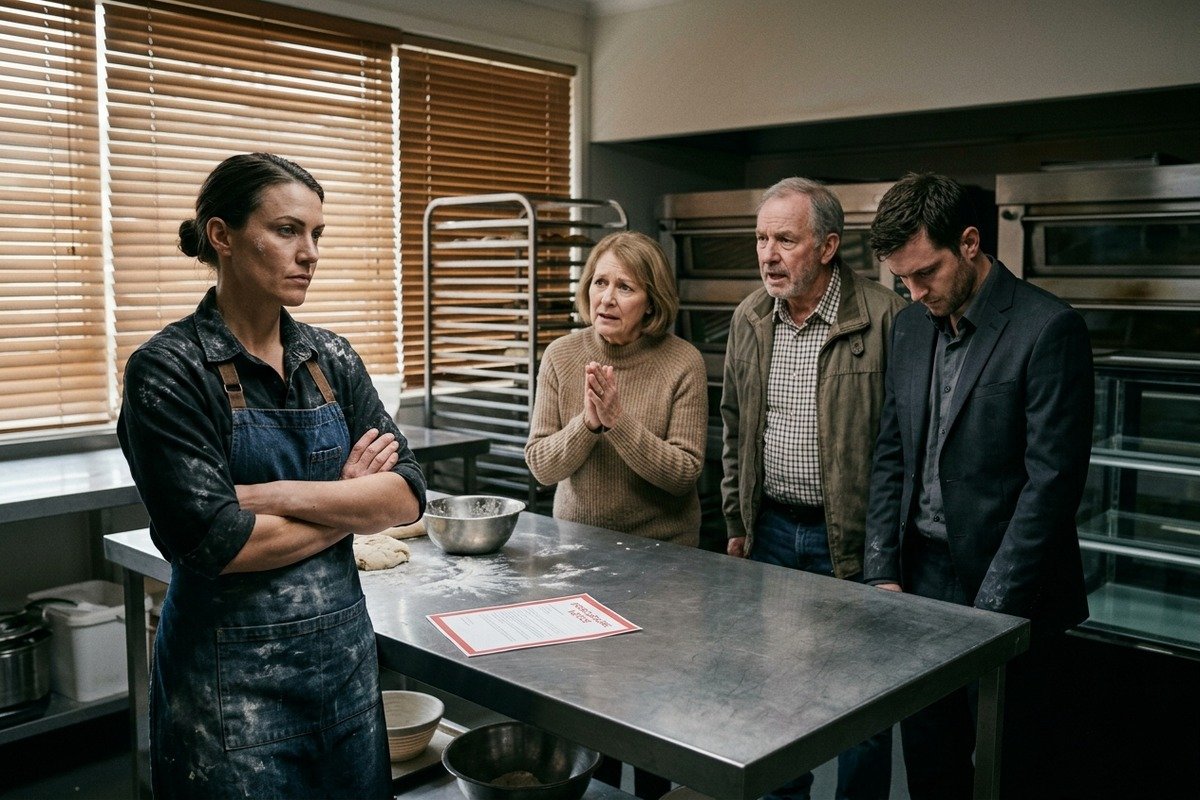
A certified registered letter was delivered to my bakery, followed ten minutes later by the arrival of my parents and Julian in my parking lot.
Julian looked completely destroyed. His arrogance was gone, replaced by bloodshot eyes, unwashed clothes, and trembling hands.
Honey & Hearth was officially insolvent.
The landlord had locked the doors, the state tax authority had placed a commercial tax lien on all equipment, and the bank had initiated foreclosure proceedings on a total outstanding debt of $350,000.
And because my parents had co-signed on Julian’s expansion loans using their primary residence as collateral, the bank was threatening to seize my parents’ retirement home.
My mother burst into hysterical tears across my tasting table.
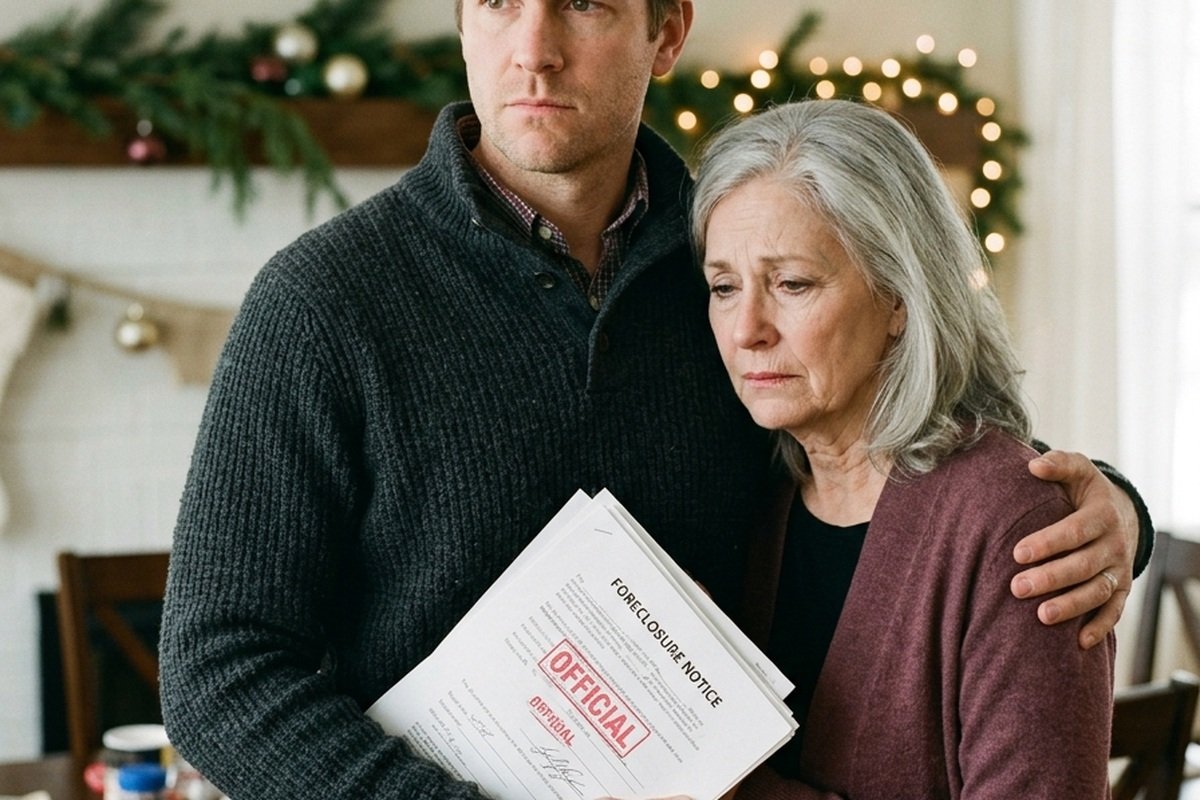
“Clara! You have to save us! The bank is giving us thirty days before they foreclose on our house!”
My father pushed a legal contract toward me with trembling hands.
“Clara, here is the solution. You buy back Honey & Hearth from Julian for one dollar. You take over the $350,000 corporate debt, merge your new successful bakery into the old corporation, and put Julian on the payroll as Operations Vice President at $75,000 a year so he can keep his health insurance.”
“You’re making so much money here, Clara. Three hundred and fifty thousand is nothing for a baker of your talent. You owe it to your parents—we gave you life, and you can’t let your brother become homeless!”
I looked down at the contract, then up at the three people standing in front of me.
“You stole twelve years of my blood, sweat, and tears to give your golden boy a playground,”
“You destroyed twelve jobs, ruined an iconic brand, ran up three hundred and fifty thousand dollars in predatory loans on frozen dough and luxury espresso machines, and now you want me to mortgage my new business to bail you out?”
Julian stepped forward, tears streaming down his face. “Clara, please… I didn’t know business was this hard! I was trying to make the family proud! If you don’t sign this, the bank is taking Mom and Dad’s home! How can you be so heartless?!”
I didn’t scream. I didn’t raise my voice.
I took the contract, tore it cleanly in half, and dropped the pieces into the stainless steel trash can.
“The bank isn’t taking your home because I’m heartless, Julian,”
“The bank is taking your home because you are incompetent, and because Mom and Dad enabled your entitlement until it finally caught fire.”
“I offered to buy the business twelve years ago for fair market value, and you called my work ‘manual labor.’ Now your manual labor is facing bankruptcy court.”
“Get out of my bakery before I call the sheriff for trespassing.”
The aftermath was brutal and unsparing.
My parents were forced to sell their five-bedroom home at a massive loss to satisfy the commercial bank guarantees, downsizing into a tiny two-bedroom rental apartment in an industrial park.
Julian was forced to file Chapter 7 personal bankruptcy. His luxury car was repossessed, his credit score was demolished, and he is currently working as a night-shift stocker at a big-box grocery store.
The forensic accounting audit demanded by the commercial bankruptcy trustee revealed a paper trail of financial recklessness that stunned even our town’s seasoned tax attorneys.
Julian had treated the bakery’s operating cash flow as his private, unlimited personal slush fund.
Over an eight-month period, nearly seventy-five thousand dollars had been drawn directly from our commercial payroll account to pay for weekend stays at luxury boutique resorts, designer wardrobes, VIP bottle service at Portland nightclubs, and a lease deposit on a high-performance German sports coupe.
Whenever our veteran accountant had warned him that withholding payroll taxes was a federal felony, Julian had dismissed her warnings with arrogant contempt, telling her that ‘cash flow is fluid for growth startups.’
By the time the state Department of Revenue intervened, Julian had failed to remit three consecutive quarters of sales tax collected directly from retail patrons, triggering an automatic civil assessment that attached personal liability directly to corporate officers.
The health department inspection that finally sealed the fate of Honey & Hearth was equally mortifying for someone who took pride in culinary craft.
Without my daily sanitation protocols and kitchen leadership, the storage walk-ins had fallen into disrepair.
Inspectors discovered compromised temperature logs, cross-contamination in the flour silos, and extensive black mold behind the fermentation retarders that Julian had refused to repair because ‘deep cleaning was an unnecessary operational overhead.’
When the local newspaper published the county public health closure notice alongside the tax lien filings, the twelve years of sterling goodwill I had built with our community was publicly shattered.
It broke my heart to see the name I had poured my youth into dragged through municipal disgrace, but it also reinforced the absolute necessity of walking away when you are betrayed by those who should protect you.
At The Mill & Ember, my new bakery, we instituted an ironclad corporate charter: I held 100% of voting shares, with zero family co-signers, zero third-party equity, and an employee profit-sharing trust that distributed twenty percent of quarterly net earnings directly back to our baking staff.
Our sourdough loaves sell out every single morning by ten-thirty, and our wholesale partnerships with regional organic farm co-ops have given our new enterprise a foundation built on rock rather than vanity.
My extended family is bitterly divided.
My mother’s sisters have called me a ‘cold-blooded monster who abandoned her own flesh and blood over money.’
My cousins and former staff members tell me that enabling Julian would have dragged me into financial ruin alongside them, and that letting them face the natural consequences of their greed was the only sane choice.
The formal bankruptcy creditor assembly held at the federal courthouse in Portland was a scene of unvarnished humiliation for Julian and my parents.
Seated in row three, my mother wept into an embroidered handkerchief while my father stared blankly ahead as twenty-two local vendors stood before the federal magistrate to testify regarding their unpaid invoices.
Local dairy farmers who had delivered whole milk on thirty-day net terms, family-owned apple orchards who had supplied cider for our seasonal pastries, and commercial flour millers who had extended credit on personal trust—all had been left with worthless promissory notes.
The bankruptcy trustee, a stern woman with twenty-five years on the bench, delivered a scorching rebuke that echoed through the marble chamber.
‘Mr. Vance, this is not an unfortunate business downturn caused by economic headwinds,’ she stated with icy precision. ‘This is an egregious pattern of vanity-driven negligence, fiduciary malfeasance, and reckless living funded entirely on the sweat of honest working people.’
Hearing the court confirm what I had known from the very first day my family staged their corporate coup was both validating and tragic.
My parents had spent their entire adult lives building a pristine reputation in our town, only to incinerate it within nine months on the altar of golden-child favoritism.
When the proceedings concluded, Julian attempted to approach me in the courthouse hallway, stammering apologies and asking if I could hire him as a dishwasher or delivery driver at my new bakery.
I looked at him with neither hatred nor malice, but with complete detachment.
‘You cannot work here, Julian,’ I told him gently. ‘Because true work requires humility, accountability, and respect for the people who help you rise. Until you find those qualities within yourself, you will always be a liability to everyone who loves you.’
Walking down the granite steps into the crisp Maine morning air, I felt the final lingering knot of grief and obligation dissolve from my shoulders.
Family loyalty is a sacred bond, but when loyalty becomes an uncritical shield for destructive behavior, it ceases to be love and becomes a form of spiritual poison.
For years, I had believed that being a dutiful daughter meant absorbing the financial and emotional deficits of my family without complaint.
I had believed that staying silent while my boundaries were crossed was the price of admission to my own family’s affection.
It took watching twelve years of my hard work reduced to ashes in nine months for me to understand that sacrifice without mutual respect is not sacrifice—it is voluntary servitude.
Setting an unbreakable boundary was the hardest thing I have ever done, but it was also the single act that saved my life, my financial future, and my self-respect.
Whenever aspiring entrepreneurs ask me what it takes to build a thriving business, I tell them that technical skill and business acumen are only half the battle.
The other half is having the courage to protect your creation from anyone who thinks they are entitled to reap where they have never sown.
Yesterday, my father sent me a short text message: “We raised you to be strong, Clara. We just never imagined you would use that strength against us.”
I read the message, put down my phone, and tied my apron back on.
The morning ovens were hot, the sourdough was ready for scoring, and for the first time in my life, my bakery was 100% mine.