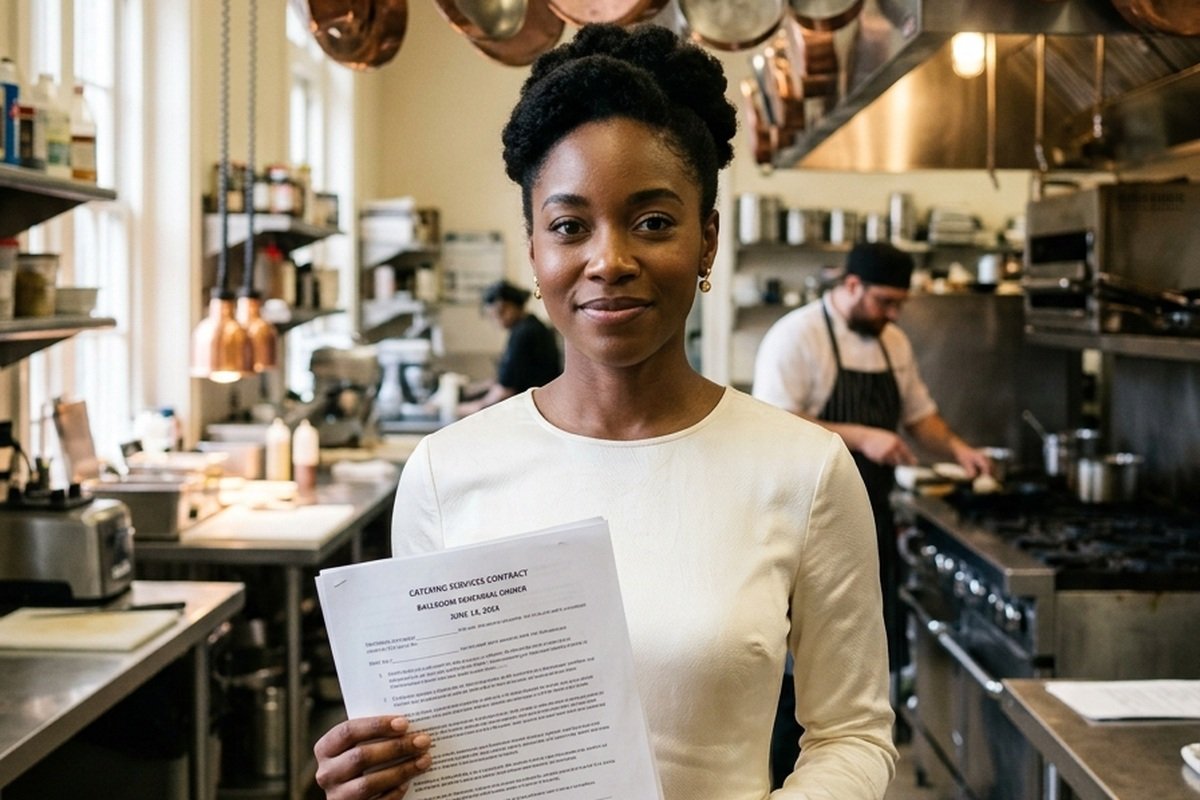
On Thursday afternoon, I was preparing fifty artisan sourdough loaves in my commercial catering kitchen when an express courier arrived at the delivery bay.
For seven years, I had built Bennett Artisan Kitchens from a small farmers market booth into a thriving independent catering enterprise.
I had saved fifty-five thousand dollars of hard-earned revenue to purchase top-tier commercial convection ovens, walk-in blast chillers, and stainless steel prep stations.
Every piece of equipment in my kitchen represented seven years of eighty-hour workweeks, burned forearms, and uncompromising financial discipline.
Because my business was my family’s sole livelihood, protecting my commercial credit and operational solvency was my highest daily priority.
My best friend since high school, Brooke Callahan, owned a high-end designer apparel boutique three blocks away on Main Street.
Brooke had always projected an image of glamorous luxury, driving leased European cars, hosting champagne trunk shows, and wearing designer silk ensembles.
Behind her glossy storefront, however, Brooke was a chaotic business owner who accumulated crushing inventory debt and ignored supplier invoices.
Six months earlier, Brooke had asked me to co-sign an eighty-thousand-dollar commercial line of credit to finance her spring fashion collection.
I had gently but firmly declined, explaining that my business bylaws and personal philosophy strictly prohibited guaranteeing outside commercial debt.
Before I purchased my commercial convection ovens, I spent four years catering out of rented church basements and shared commissary kitchens.
I woke up at three-thirty every morning to knead sourdough loaves, roast seasonal vegetables, and pack catering vans before dawn.
I saved every dollar from weddings, corporate banquets, and holiday galas into a dedicated business expansion reserve.
My late mother had taught me that a culinary business succeeds on the consistency of its food and the unblemished integrity of its name.
Because Bennett Artisan Kitchens was the foundation of my family’s financial independence, guarding my credit was my highest priority.
I wanted to build an enterprise that would support my four sous-chefs and provide my community with honest, nourishing food.
Every piece of stainless steel equipment in my kitchen was paid for in cash, completely free of commercial debt or bank liens.
Brooke Callahan and I had shared lockers in high school, celebrated college graduations together, and stood as maids of honor at each other’s weddings.
Over the past three years, however, Brooke had become obsessed with projecting an illusion of effortless fashion wealth on social media.
She leased a luxury convertible she could not afford, hosted lavish champagne launches with hired string quartets, and flew to Paris fashion weeks on credit.
Her boutique was filled with expensive designer inventory, but she rarely had enough cash on hand to pay her commercial utility bills or sales staff.
When Brooke asked me to co-sign her equipment loan six months earlier, I had explained that my corporate bylaws prohibited guaranteeing external debt.
Brooke had pretended to understand, but in retrospect, I should have realized that her financial desperation had outgrown all ethical boundaries.
Brooke had pouted for a few days, but eventually assured me that she respected my boundaries and had secured alternative investor backing.
When I signed for the express courier envelope on Thursday, I assumed it was an ordinary equipment maintenance warranty renewal.
I unfolded the legal notice inside and felt all the warmth drain from my body as I read the bold red header.
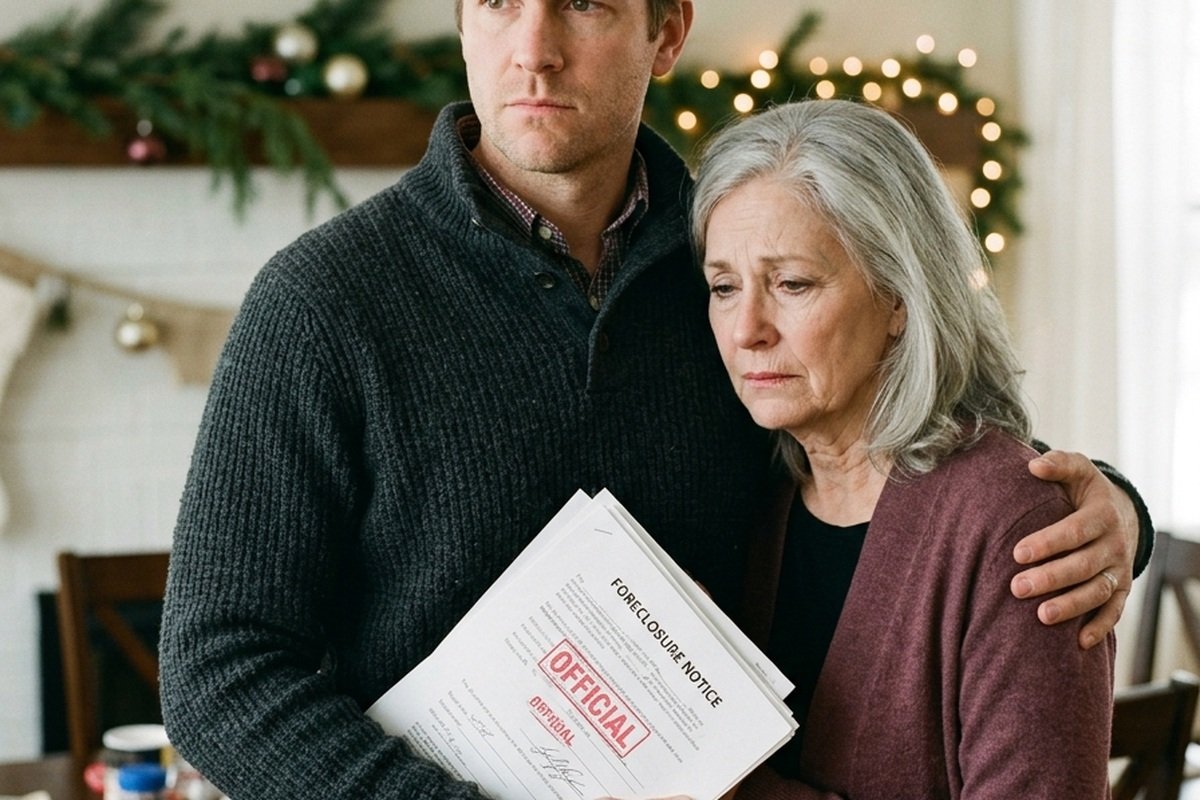
It was a formal Notice of Impending Commercial Asset Seizure issued by Horizon Merchant Capital, a regional high-interest equipment lender.
The document stated that Brooke’s boutique, Callahan Couture LLC, was ninety days delinquent on an eighty-thousand-dollar secured equipment note.
Attached to the notice was a UCC-1 financing statement and an equipment guarantee schedule listing my commercial ovens, chillers, and stainless workbenches.
I turned to the guarantor authorization page and froze in horrified disbelief.
My commercial catering kitchen was listed as the primary corporate guarantor, complete with my corporate tax identification number.
On the signature line was a crude forgery of my legal signature beneath an altered corporate resolution purporting to authorize the pledge.
I stared at the paperwork, my hands shaking with cold rage as the realization hit me: my best friend had forged my name to borrow eighty thousand dollars.
Sitting at my stainless prep table, I scrutinized the Horizon Merchant Capital foreclosure notice and its supporting loan exhibits.
The corporate resolution document showed that Brooke had forged my corporate secretary signature and affixed a fake corporate seal.
The loan agreement confirmed that Brooke had pledged my three Blodgett double convection ovens and my walk-in blast chiller as collateral.
The paperwork proved that Horizon Capital had wired eighty thousand dollars directly into Brooke’s boutique account ninety days prior.
The reason this betrayal cut to my very core was that Brooke had knowingly jeopardized my four employees’ jobs to postpone her boutique’s bankruptcy.
I realized that my childhood best friend had treated my seven years of physical toil as a disposable collateral buffer for her vanity.
I opened my corporate banking portal and checked the state department of state commercial filing index on my monitor.
The UCC-1 financing statement showed that Horizon Capital had placed a first-priority security interest across all my kitchen equipment.
That lien meant that if Brooke defaulted, commercial repo haulers had legal authority to enter my premises and strip my kitchen bare.
The document confirmed that Brooke had submitted a forged lease assignment claiming my catering kitchen was an annex of her boutique.
I printed the entire fraudulent application packet, highlighting the forged signatures and comparing them with my real notarized documents.
My corporate attorney confirmed that we had sixty hours to file a formal fraud complaint before Horizon Capital executed their replevin warrant.
I grabbed my car keys, drove three blocks down to Brooke’s boutique, and pushed open the glass entrance bell.
Brooke was standing near the cash wrap in a cashmere sweater, arranging imported silk scarves with a relaxed, cheerful smile.
“Rachel! You have to see these new Italian cashmere wraps that just arrived!” Brooke beamed, reaching out to hug me.
I stepped back, placed the Horizon Merchant Capital foreclosure notice on her marble counter, and pointed at the signature.
“Brooke, what is my signature doing on your eighty-thousand-dollar high-interest merchant loan?” I asked, my voice trembling with suppressed fury.
Brooke’s smile vanished instantly, her skin turning ashen as she looked down at the bright red repossession notice.
“Rachel, please let me explain! It was only supposed to be temporary bridge financing until my summer trunk show sales cleared!” Brooke stammered.
“You forged my signature and pledged my ovens and chillers as collateral for your insolvent boutique!” I shouted, refusing to whisper.
“They were threatening to padlock my store, Rachel! I had forty-eight hours to pay my fabric mills or lose everything!” Brooke pleaded desperately.
“So you decided to risk my entire life’s work instead? You used my kitchen as your disposable shield!” I retorted.
Inside Brooke’s boutique, the confrontation reached a boiling point as she attempted to downplay the gravity of forging commercial loan notes.
“Rachel, nobody was ever supposed to seize your ovens! The lender was just requiring standard corporate cross-collateralization!” Brooke insisted.
“You committed felony forgery, Brooke! You put my kitchen, my employees, and my credit in the crosshairs of predatory lenders!” I yelled.
“I was drowning, Rachel! The fabric suppliers in Milan were going to repossess my entire fall inventory!” Brooke shouted back.
“So you forged my signature instead of facing your own commercial failure? You stole my financial identity!” I demanded.
Instead of feeling remorse, Brooke accused me of lacking loyalty, claiming that true friends share financial risks in times of crisis.
That was the moment the confrontation reached its breaking point, because Brooke’s entitlement proved she had zero moral remorse.
Then Brooke admitted that she had used twenty thousand dollars of the loan proceeds to pay for her luxury sports car lease and personal rent.
Hearing her admit that she had pledged my commercial kitchen to pay for her sports car filled me with cold, uncompromising detachment.
Worse still, another creditor entered the boutique during our argument, demanding payment for six months of unpaid store display fixtures.
Brooke refused to surrender her store keys, until I pulled out my phone and dialed the police commercial financial crimes unit.
Brooke changed her tone from indignant arrogance to frantic sobbing, begging me on her knees not to submit the forgery affidavit.
Until that moment, I had wondered whether some part of our twenty-year friendship could be salvaged after this nightmare.
But looking down at her, I saw only a reckless, dishonest manipulator who had treated my life’s labor as expendable collateral.
The reason I refused to cover for Brooke was because protecting my honest business and my employees was my highest moral responsibility.
I feared that if I hesitated for even one day, predatory collection agencies would seize my equipment and destroy my catering contracts.
I wanted to demonstrate to my team that their hard work and dedication would never be compromised by outside corruption or betrayal.
Because our kitchen was built on honest sweat and transparent dealings, we thought of this stand as an essential defense of our life’s work.
We knew why Brooke had targeted my kitchen: she believed our lifelong friendship would prevent me from taking legal action against her.
I wanted to establish an unbreakable boundary, proving that no relationship justifies tolerating criminal fraud or financial destruction.
My attorney and I met with Horizon Merchant Capital’s general counsel via an urgent teleconference on Friday morning.
We presented the forensic handwriting analysis, the fraudulent corporate resolution, and our sworn criminal forgery affidavit.
Faced with incontrovertible proof of loan fraud, Horizon Capital immediately terminated the guarantee agreement against Bennett Artisan Kitchens.
The lender filed a formal UCC amendment releasing all liens on my convection ovens, blast chillers, and kitchen equipment within two hours.
Horizon Capital redirected their legal enforcement solely against Brooke Callahan, filing an emergency freezing order on her boutique inventory.
The police commercial crimes detective opened an active felony investigation into Brooke’s unauthorized credit conversions.
The reason this betrayal was so devastating was that merchant lenders move with ruthless speed, giving guarantors only seven days before seizing equipment.
I believed that if Horizon Capital dispatched their repossession haulers, my kitchen would be stripped bare, destroying contracts for three upcoming weddings.
I feared that seventy hours of unaddressed legal default would trigger catastrophic commercial liens across all my banking relationships.
I wanted to protect my business and my employees, so I refused to let twenty years of friendship blind me to criminal fraud.
I walked straight to my attorney’s office, where we drafted a formal Affidavit of Forgery, a police fraud complaint, and a UCC dispute notice.
We contacted Horizon Merchant Capital’s legal compliance division, providing forensic handwriting samples and proof of unauthorized identity conversion.
When the lender’s general counsel reviewed the forgery affidavit and realized Brooke had committed federal wire and loan fraud, they cancelled the guarantee instantly.
Horizon Capital removed all liens from Bennett Artisan Kitchens and initiated direct foreclosure proceedings solely against Brooke’s business assets.
Brooke arrived at my kitchen back door that evening, crying hysterically and begging me to withdraw the fraud affidavit.
“Rachel, if you submit this police report, they will close my boutique and report me to the state commercial fraud division!” Brooke wept.
Instead of showing genuine remorse for nearly destroying my life, Brooke was still obsessed with protecting her glamorous public facade.
That was the moment the confrontation reached its end, because I realized Brooke valued her luxury illusions far more than our friendship.
“Brooke, you made the choice to forge my name and endanger my livelihood. The consequences belong entirely to you,” I told her calmly.
I closed the heavy kitchen door and locked the deadbolt, permanently closing the door on our twenty-year friendship.
Over the next two months, Brooke’s boutique was liquidated by creditors, and she moved to another city to work as a retail associate.
Bennett Artisan Kitchens continued to flourish, catering dozens of joyful community weddings and expanding our artisan bread delivery routes.
Now, as the rich aroma of baking sourdough fills my kitchen every morning, I am grateful that courage and clear boundaries protected the work of my hands.
Over the following weeks, my catering kitchen operated at full capacity, preparing three hundred artisan dinners for the regional hospital gala.
My head chef and sous-chefs celebrated with me in the kitchen, opening a bottle of sparkling cider to toast our restored commercial freedom.
Brooke Callahan closed her boutique at the end of the month, liquidating her remaining designer inventory to settle creditor judgments.
She moved out of the city to avoid public embarrassment, and our twenty-year relationship ended permanently with complete finality.
Bennett Artisan Kitchens secured a prestigious multi-year catering contract with the state university conference center in the spring.
We expanded our kitchen staff, adding two talented culinary apprentices and investing in a new automated pastry sheeter.
Our bakery division launched a weekend sourdough delivery subscription that quickly gained over four hundred dedicated regional customers.
Local bridal planners consistently recommended our company, knowing our kitchen delivered perfection with absolute reliability and honesty.
Now, every morning at sunrise, when the golden crusts of my sourdough loaves come crackling out of the ovens, I feel profound peace.
Clear boundaries and unwavering integrity preserved my life’s work, proving that courage is the ultimate recipe for enduring success.
Months later, when local entrepreneurs ask me for business advice, I tell them that professional independence and honesty are non-negotiable.
Our kitchen received the county culinary excellence award for supporting regional grain farmers and heirloom millers.
My four sous-chefs received full health benefits and equity bonuses, sharing in the legitimate prosperity of our growing company.
We partnered with local culinary schools to mentor young female chefs, teaching them contract law and commercial asset protection.
The memories of Brooke’s deceit became an essential lesson in setting firm boundaries and defending what you love.
Every tray of fresh brioche and golden sourdough that leaves our doors carries the mark of uncompromised passion and honest sweat.
The kitchen remains a thriving sanctuary of honest craftsmanship, filled with the warmth of genuine dedication and earned trust.
Our commercial kitchen was featured in the state gastronomy journal as a model of independent artisan entrepreneurship.
My sous-chefs and I created a scholarship fund for aspiring young bakers who dream of opening debt-free community food enterprises.
We learned that real partnership is founded on mutual honesty, transparency, and deep respect for each other’s boundaries.
Every dawn that breaks over our stainless steel tables brings fresh purpose, joy, and unbroken peace.
The apprentices who train in our kitchen learn that culinary skill is meaningless without ethical business principles.
We continue to bake with joy, anchored in the certainty that our life’s labor belongs securely to our own hands.
True friendship respects what you have built, and real self-worth never allows anyone to turn your life’s work into collateral for their vanity.