On Thursday afternoon, I left my pediatric occupational therapy clinic at three o’clock to prepare for my nine-year-old son Leo’s routine sensory therapy session.
Leo was diagnosed with moderate autism spectrum disorder when he was three, and for six years, our entire household has operated on strict, predictable sensory routines.
Unpredictable loud noises, bright strobe lighting, and unexpected visitors trigger profound sensory overload for Leo, often resulting in severe emotional distress that takes days to stabilize.
Through immense dedication, structured behavioral therapy, and quiet home routines, Leo had achieved remarkable progress, learning to read chapter books and play gentle classical melodies on the piano.
Every element of our living space was carefully calibrated to preserve Leo’s neurological safety, from the dimmable ambient lamps to the sound-dampening acoustic curtains in our family room.
My sixty-two-year-old mother Eleanor, who lives six blocks away in our suburban neighborhood, had always struggled to accept Leo’s neurological condition.
Eleanor frequently complained that our sensory boundaries were overly restrictive, claiming that Leo simply needed more public exposure to outgrow his sensitivities.
She was deeply active in local social clubs, obsessed with dramatic community attention, and frequently shared private family updates on public social media forums despite my repeated objections.
I had consistently established strict boundaries regarding Leo’s medical privacy, prohibiting Eleanor from sharing his diagnostic assessments or therapy milestones outside our immediate circle.
Because Eleanor equated social visibility with personal importance, she perceived my protective measures as an exaggerated overreaction rather than medical necessity.
As I turned my car onto our quiet residential cul-de-sac on Thursday afternoon, my heart leaped into my throat at the sight of three large commercial production box trucks parked outside my house.
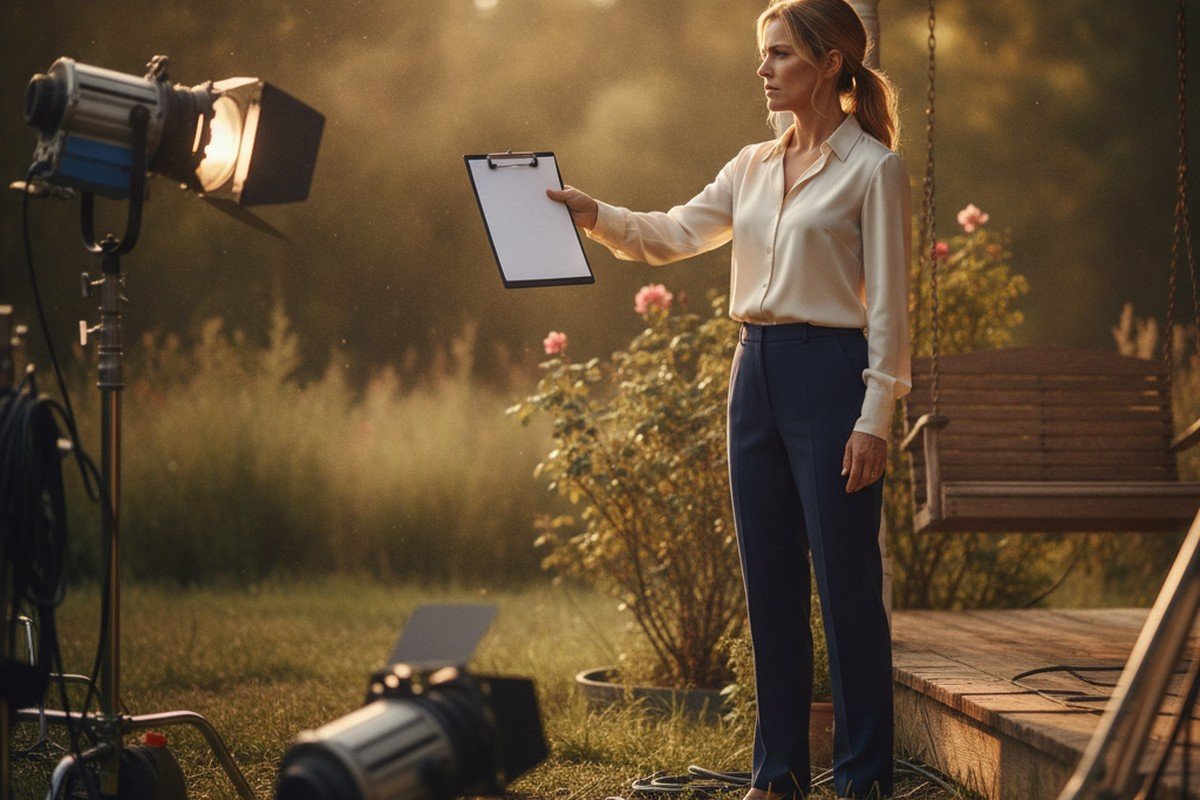
Cables thick as garden hoses snaked across our front lawn, two industrial aluminum lighting stands were positioned beside our porch, and four crew members wearing audio headsets were unloading heavy camera pelican cases.
I parked crookedly in the driveway, leaped out of my car, and confronted a man carrying a clipboard and wearing an official lanyard marked Pinnacle Reality Media.
The man introduced himself as Darren, the associate field producer for an upcoming streaming documentary series titled Unfiltered Families: Real Lives, Real Struggles.
Darren cheerfully announced that they were setting up for an intensive five-hour interior shoot to capture Leo’s authentic unscripted emotional meltdowns during evening transition periods.
I stood frozen on my front pathway, blood rushing to my ears with such force that for several seconds I could barely process his words.
I told Darren that he was trespassing on private property, that no production company had permission to film my minor child, and that they needed to pack their gear immediately.
Darren frowned with genuine surprise, flipped through his clipboard, and pulled out a signed legal document titled Minor Appearance and Residential Location Release Form.
I snatched the document from his hand, my fingers trembling with outrage as I examined the signature block on page six.
The agreement granted Pinnacle Reality Media full unrestricted audiovisual broadcast rights to film inside our home, access Leo’s private therapy spaces, and broadcast his likeness globally in perpetuity.
In the primary legal guardian signature line, written in elaborate looping cursive, was Eleanor’s full signature, claiming to act as Leo’s authorized legal custodian and property co-owner.
Attached to the release was an itemized corporate talent voucher confirming that Eleanor had accepted a two-thousand-five-hundred-dollar talent acquisition stipend deposited directly into her private checking account.
I stared at Eleanor’s signature in sheer horror, realizing that my own mother had commodified her grandson’s vulnerable neurological condition for financial profit and cheap television notoriety.
The reason this production intrusion was so catastrophic was that exposing Leo to blinding camera lights, intrusive boom microphones, and a crowd of strangers inside his safe space would cause catastrophic psychological regression.
Leo’s developmental pediatrician had warned us that severe sensory trauma could undo years of communication progress and trigger debilitating behavioral panic.
I believed that if the television cameras were allowed to film inside our living room, Leo would lose his trust in our home as a place of safety.
I feared that broadcasting his sensory struggles to a national audience would permanently compromise his dignity and invite lifelong digital harassment.
I wanted to protect my child’s psychological well-being at all costs, so I refused to permit a single production assistant across our threshold.
The thought of Eleanor trading Leo’s emotional vulnerability for a reality television stipend filled me with profound revulsion.
Just then, Eleanor’s sedan pulled into the driveway; she stepped out wearing an elegant new dress, carrying shopping bags, and smiling with theatrical anticipation.
“Darren! You’re here early!” Eleanor called out cheerfully before freezing as she noticed me standing beside the lighting rigs with the signed release form in my hand.
“Eleanor, step onto the porch right now,” I said, my voice dangerously low and vibrating with cold fury.
Eleanor hurried over, attempting to brush past me with a dismissive wave of her hand.
“Maya, darling, don’t make a scene in front of the crew,” Eleanor whispered hurriedly. “This documentary is an incredible opportunity! A national streaming platform wants to feature our family’s journey, and the producer said it could lead to speaking engagements and a regular awareness segment!”
“You sold your autistic grandson’s private pain for twenty-five hundred dollars!” I yelled, completely ignoring her pleas for decorum.
“You signed a legal document claiming you were his custodian, you forged an agreement to film inside my private home, and you invited strangers to film my son having sensory meltdowns!”
Eleanor’s face flushed bright red, shifting rapidly from theatrical charm to defensive indignation.
“I did it for his own good!” Eleanor argued loudly. “People need to see the real, gritty struggle! You keep him hidden in this quiet bubble like you’re ashamed of him, and this show would have made him famous!”
Instead of showing remorse, Eleanor insisted that she was entitled to direct family publicity because she had contributed to his preschool tuition four years earlier.
That was the moment the argument changed, because I realized Eleanor viewed my son not as a vulnerable human being, but as a prop for her personal vanity.
Then Eleanor admitted that she had already scheduled a secondary interview with a local magazine to promote her appearance in the documentary.
This revelation proved that she had spent weeks orchestrating a multi-platform media campaign behind my back.
Worse still, another crew member approached holding an audio boom, asking if they could place hidden microphones inside Leo’s bedroom closet.
I discovered that Eleanor had provided the production team with Leo’s medical therapy schedules and a hand-drawn map of our house floorplan.
Until that afternoon, I had tolerated Eleanor’s overbearing opinions, but her calculated exploitation of my son’s disability severed every remaining bond of trust.
I turned directly to Darren, who was now watching the confrontation with deep professional alarm, realizing the legal catastrophe unfolding before him.
“Listen to me very carefully, Darren,” I said, holding up my driver’s license and Leo’s certified birth certificate from my purse.
I showed him the legal custody order and our property deed, which verified beyond all doubt that Eleanor possessed zero parental authority.
“I am Leo’s sole legal mother and the sole deeded owner of this property. Eleanor holds zero guardianship rights and zero property ownership. If a single camera lens enters my doorway or points toward my son, I will have your crew arrested for criminal trespass, and my attorney will file an immediate emergency injunction against Pinnacle Media for fraudulent exploitation of a vulnerable minor.”
Darren’s eyes widened in panic as he recognized the immense legal liability of filming a minor without parental consent.
He immediately signaled his crew chief, shouting urgent orders to dismantle the lighting stands, coil the cables, and reload the production trucks.
“Wrap it up! Everything back in the trucks right now!” Darren shouted, turning away from Eleanor without another word.
Eleanor stared in disbelief as her dream of reality television stardom collapsed in less than ten minutes.
I turned back to Eleanor, my voice completely steady and devoid of warmth.
“You are going to wire that twenty-five hundred dollars back to Pinnacle Media tonight, and you are never stepping foot inside this house again,” I told her.
Eleanor began crying, attempting to play the role of the misunderstood, well-meaning grandmother, but the boundary was permanent.
I told Eleanor that our relationship was over and that if she ever attempted to contact Leo’s school, therapists, or media representatives again, I would petition the family court for a formal restraining order.
Within forty minutes, the commercial production trucks had cleared the street, leaving our cul-de-sac once again quiet and safe.
I stood on the quiet porch as the last box truck turned the corner, watching the afternoon breeze rustle the oak leaves in our front yard.
When Leo returned home from his school program ten minutes later, he walked into a calm, familiar living room filled with soft afternoon sunlight and gentle piano music, completely unaware of the exploitation we had narrowly averted.
Leo dropped his backpack into his storage cubby, reached for his favorite tactile weighted blanket, and sat beside the window humming peacefully.
Seeing his serene expression reinforced my absolute conviction that defending his boundaries was the most important responsibility of my life.
That evening, after Leo was asleep, I sat down at my desk and reviewed the printed location release agreement page by page.
I checked the indemnification clause on page eight, which confirmed that Pinnacle Media would have held perpetual rights to license the footage to third-party reality networks without editorial oversight.
The thought that our intimate home struggles could have been turned into sensational entertainment clips sent chills down my spine.
On Friday morning at eight o’clock, I visited Leo’s developmental pediatrician, Doctor Hayes, to report the attempted filming and request an updated medical privacy notice.
Doctor Hayes listened with grave concern, commending my swift intervention and signing a certified clinical attestation regarding the severe psychological harm reality media would inflict on Leo.
Doctor Hayes explained that sudden public scrutiny and invasive filming would have caused severe regression in Leo’s language development and emotional stability.
The physician outlined how sensory dysregulation from bright stage lighting and intrusive boom equipment can trigger long-term trauma responses in children on the autism spectrum.
Doctor Hayes urged me to ensure that every educational and clinical facility Leo attended maintained a hardened administrative perimeter against unauthorized visitors.
I took that certified clinical statement directly to Leo’s specialized school administration, providing copies to the principal, the lead resource specialist, and the campus security officer.
I verified that Eleanor was permanently removed from all authorized pickup registries and emergency contact rosters.
The school administrators confirmed in writing that under no circumstances would Eleanor or any media representatives be permitted on campus premises.
The principal immediately flagged Leo’s student profile with a red priority privacy badge, instructing front desk staff to notify local police if Eleanor approached the gates.
Later that Friday afternoon, I met with my family attorney, David Vance, to formalize our legal safeguards.
David reviewed the documentary release copy and drafted a formal legal cease-and-desist letter addressed to Pinnacle Reality Media’s corporate headquarters in Los Angeles.
The letter put Pinnacle Media on formal legal notice that any unauthorized broadcast or retention of footage from our property would result in immediate statutory damages and civil litigation.
David also prepared a binding statutory notice of criminal trespass against Eleanor, warning her that entering our residential parcel would result in immediate law enforcement action.
We also filed an emergency petition for an ex parte protective restraining order to legally enforce the boundary around our home and Leo’s therapy clinics.
On Saturday morning, I received an official certified courier letter from Pinnacle Reality Media’s executive vice president of legal affairs.
The document confirmed that contract number four-nine-one had been formally voided and canceled in its entirety.
The legal notice stated that all digital media files recorded outside our address had been wiped from their production servers, and that Eleanor had refunded the twenty-five hundred dollar talent advance in full.
Reading that formal corporate confirmation lifted an enormous weight from my shoulders, proving that swift, uncompromising action had completely dissolved the threat.
That evening, I sat with Leo in his sensory room as he arranged his color-coded wooden blocks in intricate geometric spirals on the carpet.
The rhythmic click of the wooden tiles and his calm, focused breathing filled the room with profound, undisturbed peace.
I thought about how fragile that peaceful world was, and how easily an entitled family member could have shattered it for temporary ego gratification.
The consequence for Eleanor was absolute isolation from her grandson’s life: she was legally barred from our property and forced to repay the talent stipend under threat of legal action from Pinnacle Media.
The consequence for our family was an impenetrable protective boundary around our home that ensures Leo’s childhood dignity remains sacred.
The cost of defending Leo was the permanent loss of my relationship with my mother, but the cost of surrender would have been the destruction of my son’s emotional safety.
Because I acted decisively, the television contract was formally canceled within twenty-four hours, and all recorded street footage was destroyed by the production studio.
Over the next three months, our home life returned to its comforting, predictable rhythm of piano practice, therapy games, and peaceful weekend walks in the nature park.
Leo made steady progress in his expressive communication, mastering new complex melodies on the keyboard and speaking with growing confidence.
We celebrated his tenth birthday in May with a quiet backyard picnic attended only by his devoted speech therapist and his favorite cousin.
For his birthday gift, we built a sturdy cedar sensory swing under our mature maple tree, giving him a safe space to decompress after school.
Watching Leo swing gently back and forth with his eyes closed and a peaceful smile on his face reminded me why protecting our domestic sanctuary matters so deeply.
Three months later, Leo completed his first public piano recital in front of an appreciative, supportive audience of fellow students and parents.
He played a short, flawless rendition of a classical sonatina, never once looking startled by the hall or the hushed listeners.
Watching him smile with calm pride as the applause filled the auditorium, I knew that true advocacy requires unwavering courage.
A parent’s primary duty is to protect their child’s dignity and emotional safety, no matter who attempts to cross that line.
Authentic love protects vulnerabilities in quiet safety; it never parades them on a stage for money or applause.
Our home remains peaceful, Leo’s world stays predictable, and our family boundaries stand completely unbroken.
In the quiet stillness of our suburban evening, I reflected on how easy it is for entitlement to disguise itself as familial affection.
By enforcing absolute boundaries and demanding legal accountability, I preserved a foundation where my son can grow without fear or exploitation.
I will continue guarding my son’s peace with the fierce dedication every vulnerable child deserves.
And whenever I listen to Leo play his favorite gentle melodies in the warm afternoon light, I will remember the Thursday afternoon I stood on our lawn and protected his future.