On Tuesday morning, I unlocked the heavy steel latch on our eastern equipment shed just as the early ridge sun began burning through the river fog.
Our family has operated a seventy-acre mixed hay and rye farm in the river valley for three generations, and every machine on this property represents decades of sweat, frugal living, and meticulous seasonal maintenance.
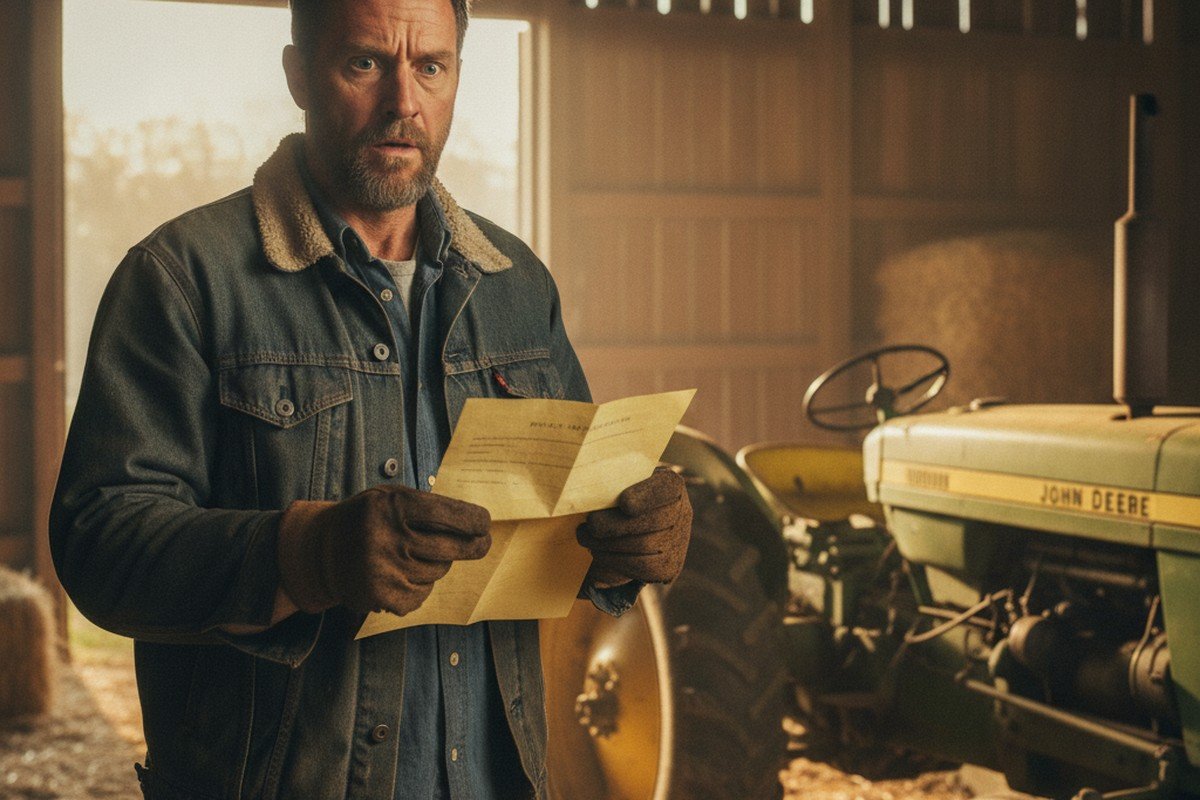
My grandfather had purchased a 1954 John Deere Model 60 row-crop tractor brand new from the county agricultural implement dealer the very spring my father was born.
Through fifty harvest seasons, that green two-cylinder workhorse had hauled every square bale of Timothy hay, graded the creek crossings, and pulled delivery wagons through deep November mud.
When my father retired five years ago due to failing hips, the vintage tractor had been relegated to the rear machine lean-to, suffering from a cracked cylinder block, seized steering spindles, and dry-rotted rubber.
Over the following three winters, I spent more than seven hundred hours of meticulous labor and six thousand two hundred dollars of my personal savings completely overhauling the machine.
I sourced authentic replacement cylinder sleeves from a specialty casting foundry in Iowa, rebuilt the entire two-cylinder engine from the crankcase up, rewired the six-volt electrical harness by hand, and applied four coats of classic agricultural enamel.
The restored tractor was not merely a functional utility vehicle; it was a museum-grade family heirloom that carried the tangible history of my family’s agricultural survival.
My younger brother Kyle, who worked as a commission sales associate at an outdoor recreational vehicle dealership fifteen miles away in the county seat, had always viewed our family property through a very different lens.
Kyle frequently complained about agricultural chores, rarely visited unless he needed commercial shop tools or emergency vehicle repairs, and harbored a relentless desire to appear prosperous to his social circle.
Six months earlier, Kyle had announced with great fanfare that he was joining the regional competitive bass fishing circuit and needed a modern thirty-two thousand dollar fiberglass tournament boat to establish his professional image.
Our father had explicitly warned Kyle against financing an expensive luxury boat on an entry-level retail salary, but Kyle dismissed the caution as uninspired rural pessimism.
I assumed Kyle had either postponed the boat purchase or secured a conventional co-signer through his dealership employer.
At half past eight on Tuesday morning, as I was greasing the sickle-bar mower on the barn apron, a heavy dual-wheel recovery flatbed truck rattled down our gravel lane.
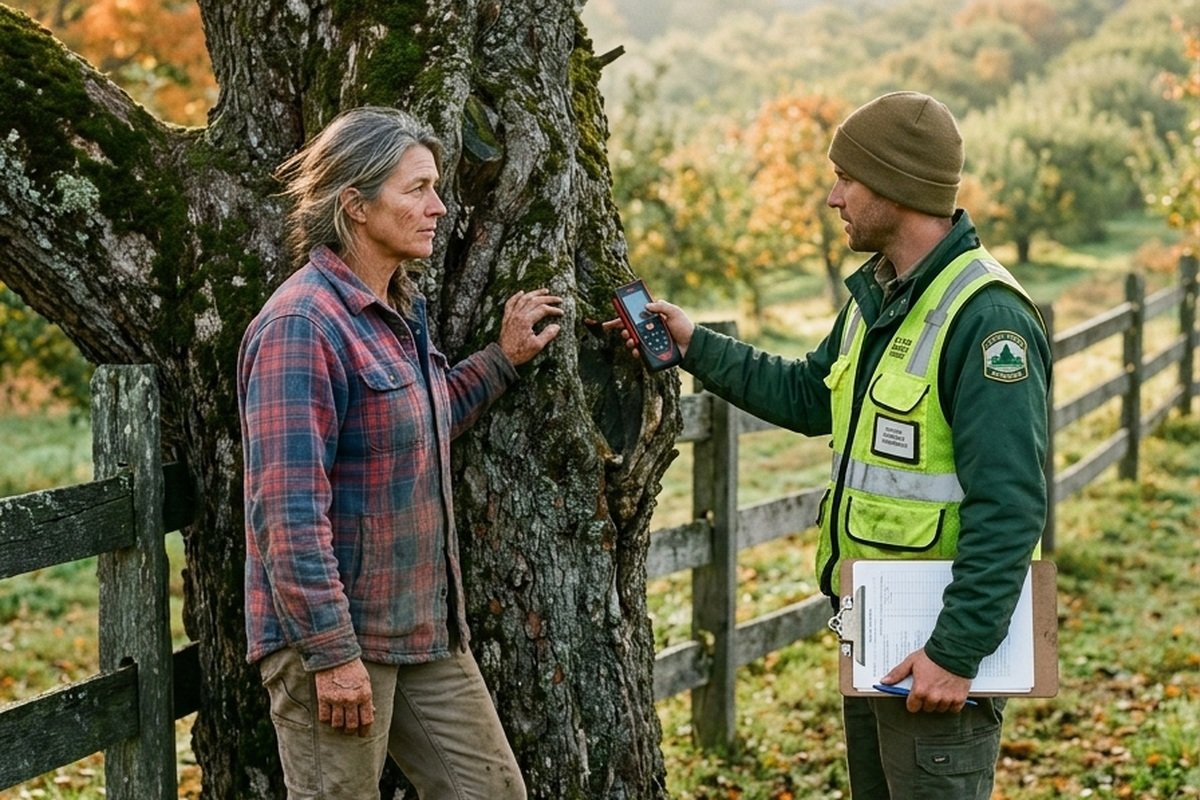
A stocky man wearing a high-visibility utility vest and carrying a metal clipboard stepped down from the cab and introduced himself as Ray from Tri-County Recovery Services.
Ray informed me that he was authorized by Valley Crest Financial to take immediate physical possession of a 1954 John Deere Model 60 tractor bearing serial number four-eight-two-six-nine.
I stopped wiping grease from my hands and stared at him in utter disbelief, thinking for a brief second that he had typed the wrong rural box route into his navigation console.
I told Ray that the vintage tractor was my personal unencumbered property, kept on private agricultural land, and had never been financed through any commercial lending institution.
Ray sighed with the weary patience of an experienced field repossession agent and unclipped a yellow triplicate legal folder from his clipboard.
He handed me the official notice of repossession, an itemized affidavit of borrower default, and a certified copy of a commercial chattel mortgage contract.
I looked at the document and reviewed the signature line, which clearly contained Kyle Miller as the primary borrower, and right beneath his printed name was the exact manufacturer serial number of my restored tractor.
The paperwork confirmed that Kyle had pledged the vintage tractor as seven thousand five hundred dollars of tangible unencumbered collateral to secure a subprime installment loan for his boat.
To satisfy the bank’s underwriting requirements, Kyle had executed a sworn affidavit claiming sole personal ownership of the machine, asserting that he stored it on the family farm by informal permission.
Even more brazenly, Kyle had attached detailed photographs of my finished tractor taken inside my barn while I was away at the regional seed convention last November.
The loan agreement showed that Kyle had missed his second consecutive sixty-day installment payment, triggering an immediate non-curable default and an open repossession warrant.
I explained the entire history of the machine to Ray, showing him my hands shaking with controlled fury, and pointed toward the locked shed door.
“Look, mister,” Ray said gently, adjusting his glasses. “I can see you’re telling the truth, but on paper, Valley Crest Financial holds a perfected legal lien against this specific vehicle identification plate. If I leave without the collateral or an official court stay, my dispatch office will report an unlawful repossession interference to the county sheriff.”
The reason this situation was so dangerous was that once vintage equipment enters a commercial impound yard, it is processed for bulk wholesale auction within fourteen business days.
I believed that if the tractor were hauled off on that flatbed, it would be towed forty miles to a crowded industrial lot where delicate sheet metal, authentic carburetors, and original gauges were routinely damaged or stripped by salvage scavengers.
I feared that losing the machine would destroy fifty years of family history because an auction sale could never be undone.
I wanted to protect the heritage that our grandfather had entrusted to me, so I refused to allow the hauler to back up to the shed.
I told Ray that I would produce proof of title within thirty minutes if he agreed to hold the truck at the end of the driveway while I contacted our county clerk and the financing branch.
Ray hesitated, looked back at the immaculately restored green tractor visible through the opened shed doors, and agreed to pause his recovery timer until ten o’clock.
I sprinted to the farmhouse office, opened the fireproof deed box, and reviewed my original notarized bill of sale from my father, my state machinery registration records, and five years of receipts for mechanical overhaul parts.
I compared the serial numbers on my state tax statement with the repossession notice, which verified beyond doubt that the equipment had belonged exclusively to me since my father’s retirement.
I then called Kyle on speakerphone while dialing Valley Crest Financial’s legal branch on my landline.
Kyle answered on the third ring with a loud, distracted greeting, clearly sitting in the dealership breakroom.
“Kyle, there is a recovery flatbed idling in our equipment yard right now to haul grandfather’s Model 60 to an impound auction,” I said, struggling to keep my voice steady. “You pledged my tractor as collateral for your bass boat, and you signed a fraudulent affidavit claiming you owned it.”
A heavy silence fell over the line, followed by the faint rustle of vending machine wrappers as Kyle’s cheerful demeanor instantly evaporated.
“Nolan, wait, don’t let them take it,” Kyle stammered, panic breaking through his voice. “That loan officer told me it was just a paperwork formality to satisfy their debt-to-income margin. I was going to pay the arrears next Friday after my quarterly sales bonus cleared!”
“Your bonus was canceled two weeks ago when your dealership downsized inventory, Kyle!” I shouted back, refusing to let him deflect. “You lied to a commercial financial lender, you forged a claim of title over my property, and you put a repossession target on our grandfather’s seventy-year-old tractor!”
Instead of taking responsibility, Kyle began pleading, insisting that if I just let Ray take the tractor temporarily, he would borrow cash from our aunt to redeem the lien before the auction date.
That was the moment the argument changed, because I realized Kyle truly believed that my property existed to serve as his personal financial safety net.
“I will not let a repossession company touch a single bolt on this tractor, Kyle,” I told him icy cold. “You are going to call Valley Crest Financial right now, or I will hand Ray the fraud paperwork and walk directly into the county prosecutor’s office.”
Then Kyle admitted that he had already received three final cure notices and that the lender had refused to accept partial payments.
This revelation proved that Kyle had known about the impending seizure for weeks and chose to remain silent while the recovery driver was dispatched to our farm.
Worse still, another repossession notice arrived on my email portal an hour later, showing that Kyle had also listed our utility flatbed trailer as secondary security.
I discovered that Kyle had walked through our yard last autumn, cataloging serial numbers while our family was eating Thanksgiving dinner together.
Until that morning, I had always believed Kyle was merely immature, but his calculated deception proved that he possessed zero respect for my livelihood.
While Kyle scrambled on his end, I connected directly with Margaret Vance, the senior branch compliance manager at Valley Crest Financial.
I emailed Margaret high-resolution scans of my original equipment purchase bill of sale, the historical registration documentation, and dated photographs of my three-year restoration process.
Margaret reviewed the files in silence for two minutes before letting out a sharp, audible exhale over the receiver.
“Mr. Miller, our loan officer failed to verify physical proof of title or conduct an independent on-site inspection of the collateral before registering this chattel lien,” Margaret acknowledged with stark professional gravity. “Your brother Kyle signed an explicit representation of exclusive ownership under penalty of perjury.”
I explained that my attorney was prepared to file an emergency petition for wrongful conversion and preliminary injunction against Valley Crest Financial if their recovery driver touched the machine.
Margaret requested five minutes to confer with the bank’s regional legal counsel and instructed me to keep Ray on the property.
Four minutes later, Ray’s handheld cellular terminal chimed loudly with an urgent administrative transmission from his dispatch coordinator.
Ray read the screen, looked up at me with an apologetic grin, and clipped his yellow duplicate slips back into his binder.
“Repossession order canceled by lienholder due to fraudulent collateral verification,” Ray announced, shaking his head. “Valley Crest is recalling the recovery writ and accelerating the unsecured loan balance against the borrower personally.”
After Ray drove his flatbed back down the driveway, the immediate physical danger to the tractor had passed, but the administrative nightmare was only beginning.
Valley Crest Financial officially released their fraudulent lien against the tractor by three o’clock that afternoon, filing an expedited release certificate with the county recorder.
However, because Kyle had executed a fraudulent affidavit, the bank immediately revoked his boat financing and demanded the full thirty-two thousand dollar loan balance within ten calendar days.
When Kyle could not produce the funds, the lender repossessed his brand-new tournament boat from his suburban driveway the following morning and instituted formal civil fraud proceedings against him.
Our parents were devastated by Kyle’s dishonesty, but our father refused to bail him out or mortgage any part of the farm to cover his debts.
I padlocked the equipment shed with a heavy hardened-steel chain and installed a cellular motion security camera inside the bay to protect the tractor against any future family boundary violations.
Kyle was forced to surrender his bass boat, enter a strict debt settlement plan with Valley Crest Financial, and endure a severe lesson in legal accountability.
Today, the green 1954 John Deere Model 60 sits securely on the shed apron, running as smoothly as the day it left the assembly line.
You never compromise an authentic family legacy to feed someone else’s reckless vanity, and boundaries are only as strong as your willingness to defend them.
That evening, our father walked down the lane to the equipment shed carrying a thermal pot of coffee and sat on the wooden fender of the tractor.
We talked for two hours about the history of the homestead and the painful reality that Kyle’s entitled habits had finally collided with the legal system.
My father told me that forty years earlier, his own brother had attempted to mortgage a parcel of timberland without consent, creating a rift that lasted a generation.
“You did the right thing by stopping that truck at the gate, Nolan,” my father said quietly, running his hand over the cast-iron steering housing. “If you had let them roll this machine onto that flatbed out of pity for Kyle, you would have spent the next twenty years apologizing for protecting what was yours.”
Hearing my father validate my stance removed any lingering hesitation I felt about drawing a permanent line with my brother.
On Wednesday morning, Kyle drove out to the farm unannounced, parking his sedan by the grain silos and walking toward the barn with his head down.
When he saw me standing by the tractor with a torque wrench in hand, he stopped ten paces away, visibly exhausted and defensive.
“You didn’t have to report the title fraud to Margaret Vance, Nolan,” Kyle muttered, kicking at the gravel. “If you had just given me three days to find a secondary co-signer, the bank wouldn’t have revoked my boat loan.”
“Kyle, you committed felony loan fraud using my vehicle identification numbers,” I answered, keeping my voice firm and uncompromising.
“You didn’t ask my permission, you didn’t care that this machine represents three years of my life and fifty years of grandfather’s labor, and you gambled my property on a luxury hobby you couldn’t afford.”
Kyle attempted to argue that family members were supposed to absorb temporary financial friction to help each other advance, but I refused to entertain his excuses.
“The boat is already being loaded onto a transport hauler at your apartment complex, Kyle,” I told him directly. “You brought this consequence on yourself the moment you signed that affidavit.”
Seeing that his appeals to family loyalty had zero effect, Kyle turned around, got back into his car, and drove away without offering an apology.
The following week, our county recorder delivered the certified lien satisfaction notice, confirming that Valley Crest Financial had permanently expunged every reference to tractor serial number four-eight-two-six-nine from their collateral registry.
I filed that document inside our safe deposit box alongside the original bill of sale and the restoration receipts, ensuring a clear legal record for the future.
Over the next month, I spent my weekends finishing the autumn rye planting, using the Model 60 to pull the grain drill across the southern fields.
The familiar rhythmic popping of the two-cylinder exhaust echoed across the valley hills, sounding steady, reliable, and entirely unburdened.
The consequence for Kyle was severe: his credit rating was shattered, his recreational fishing aspirations were completely halted, and he was required to pay over four thousand dollars in administrative legal penalties to Valley Crest.
The consequence for our farm was a renewed sense of security and absolute clarity about who was welcome in our workspace.
I established an unbending household policy: no family member is permitted inside the equipment sheds without my direct supervision, and all machinery serial numbers are registered with the county sheriff’s agricultural property database.
Three months later, at our annual family Thanksgiving gathering, Kyle did not attend, but the rest of our relatives recognized that a necessary boundary had been drawn.
My grandfather built this farm on honesty, patience, and respect for hard work, and those principles will never be bartered away for shortcuts.
Every time I turn the flywheel and hear that sixty-year-old engine roar to life in the morning chill, I am reminded that true heritage is worth defending at any cost.
The green tractor remains right where it belongs: anchored on family ground, working the soil, and standing as a permanent testament to integrity.
Before the winter frosts settled in, our neighbor Frank stopped by to inspect our newly completed rye cover crop and asked about the commotion from that Tuesday morning.
I walked Frank through the equipment bay, pointed to the steel security cage around the restoration bay, and explained how easily family assumptions can turn into legal exposure.
Frank nodded solemnly, agreeing that clear boundaries are the only reason farming families survive across multiple generations.
Later that afternoon, I wiped down the polished green hood with mineral oil, admiring the clean reflection of the valley pines against the enamel paint.
The cost of defending the tractor was a fractured relationship with my brother, but the cost of surrender would have been losing my self-respect and our grandfather’s enduring legacy.
Because I took decisive legal action, the tractor was returned to full service without a scratch, and the restoration schedule was delayed by only forty-eight hours.
The financial consequence for my brother was an immediate loss of his recreational status and a three-year garnishment of his retail commissions to satisfy the accelerated debt.
The lasting consequence for me was total autonomy over our agricultural operations and absolute confidence that our farm will remain intact for the next generation.
Now, every morning when the sun clears the ridge and strikes the green hood of the Model 60, I know that what we built here cannot be stolen by anyone who refuses to do the work.
True family loyalty is earned through honesty and shared labor; it is never a license to plunder someone else’s heritage.
The tractor stands tall in the morning light, perfectly preserved, completely unencumbered, and permanently protected against betrayal.
I will continue farming these seventy acres with the same discipline my grandfather modeled, knowing that our land and our legacy are finally safe.
And whenever I guide that two-cylinder workhorse through the harvest rows, I will remember the Tuesday morning I drew the line that saved it.