On Friday morning, I stopped by the local post office on Main Street to collect our weekly commercial mail, sorting through invoices, parts orders, and client inquiries from my commercial masonry and excavation firm.
The autumn air was crisp and scented with pine and damp earth as I stepped inside the lobby, unlocking metal post office box four-hundred-twelve with my brass key.
I was on my way to inspect a poured foundation site on the south ridge, with my travel mug in hand and my leather work notebook tucked under my arm.
Inside my box was the glossy monthly newsletter of the Shady Grove Neighborhood Association, where my uncle Thomas had served as an elected board trustee for over six years.
On the front page, under a banner headline announcing the new community walking trail project, was a prominent feature thanking Vance Masonry and Excavation for a major charitable contribution.
The article stated that my company had generously agreed to provide three full weeks of free skid-steer excavation, gravel grading, and machine operator labor for the park pathway.
Attached to the article was a printed project schedule indicating that our commercial heavy equipment would arrive on-site next Monday morning at seven o’clock sharp.
I stood in the post office lobby staring at the newsletter in total shock because I had never submitted a bid, spoken to the board, or volunteered a single hour of commercial machinery.
I opened my leather work folder and reviewed our active commercial contracts, confirming that our three machine crews were already booked solid with paying commercial foundation jobs through the end of November.
The document proved that over seven thousand dollars worth of commercial equipment runtime and operator wages had been publicly promised in my name without my consent.
I unfolded the newsletter completely and read the project timeline twice, searching for any disclaimer or note indicating that equipment availability was conditional.
Instead, the document listed my business phone number and named my senior equipment operator as the primary site supervisor for the volunteer trail project.
I felt an immediate surge of fury because committing heavy commercial machinery without operator contracts, fuel budgets, or insurance riders was an intolerable legal and financial liability.
The cost of running heavy machinery without dedicated commercial riders could easily exceed tens of thousands of dollars if an underground utility pipe were damaged during excavation.
I feared that if an untrained volunteer stepped near an active skid-steer trench on public land, my company would face catastrophic lawsuits and lose its state contractor license.
I walked out to my work truck in the gravel parking lot, called my uncle Thomas on speakerphone, and waited with a racing pulse for him to pick up.
“Thomas speaking, good morning Marcus,” Thomas answered cheerfully, his voice sounding relaxed, jovial, and immensely pleased with himself.
“Uncle Thomas, why does the association newsletter say my company is donating three weeks of heavy equipment and operators for the neighborhood park trail?” I asked.
Thomas chuckled comfortably on the phone, treating the inquiry as though I were asking about a minor social misunderstanding.
“Marcus, it is fantastic publicity for your growing business,” Thomas answered smoothly. “The association needed grading for the nature trail, and as trustee, I told them my nephew had the machines to get it done quickly.”
“You cannot volunteer forty thousand dollars of commercial machinery and three hundred hours of employee labor without asking me, Thomas,” I told him sternly.
“You are family, Marcus, and this project helps the entire community where your cousins and grandparents live,” Thomas argued, his tone shifting toward condescending authority.
“I have paying commercial foundation clients who have signed legal contracts with financial penalty clauses for project delays,” I explained.
“Then you can simply shift your commercial schedule back two weeks, Marcus,” Thomas replied dismissively, as if commercial construction deadlines were entirely optional.
The argument escalated quickly as Thomas insisted that I could simply reschedule my private commercial clients to accommodate the neighborhood project.
“The board trustee election is in three weeks, Marcus, and delivering this trail project on time is central to my reelection campaign,” Thomas admitted.
That was the moment I discovered that my uncle had volunteered my company’s machinery and crew solely to win votes and protect his political influence on the neighborhood board.
He had assured the board president that my equipment was completely free of charge, which meant the association had reallocated their eighteen-thousand-dollar trail grant into unrelated decorative landscaping.
“You used my small business and my employees as an unpaid political prop for your personal campaign,” I told him, my voice cold with anger.
“Why did you think you had the right to gamble my company’s livelihood and commercial insurance for your board election?” I demanded.
I feared that if an accident occurred on public land with uninsured volunteer equipment, my business would face catastrophic lawsuits and lose its state contractor license.
I wanted our family relationship to be built on honesty and mutual respect, but this brazen deception proved that Thomas viewed my company as his private piggy bank.
The reason I spent twelve years working sixty hours a week to build this company was to achieve financial independence, not to serve as an unpaid political tool for my extended family.
Thomas believed that because he had loaned me five hundred dollars when I was twenty-one, he held permanent leverage over my commercial operations.
He thought that by springing the announcement in a public newsletter, I would be too embarrassed to refuse in front of four hundred neighborhood families.
Thomas refused to retract the pledge, warning me that backing out now would embarrass him in front of four hundred homeowners and ruin my local business reputation.
“If you pull your machines, Marcus, everyone in this township will know that you refused to support local children and seniors,” Thomas threatened.
His willingness to blackmail me with public shame was the breaking point in our family relationship, destroying any remaining illusion of mutual respect.
Instead of backing down or submitting to his intimidation, I drove straight to the township municipal center on Route 9 to inspect the association’s public filings.
The morning sun climbed above the courthouse roof as I parked outside the county administration building, holding my business license and insurance certificates.
At noon, I met with the township records clerk and requested the formal public minutes and grant filings of the association’s last board meeting.
The printed record confirmed that Thomas had presented a signed pledge memo purporting to represent my company’s official corporate charitable commitment.
Attached to the memo was a fraudulent equipment schedule utilizing my company letterhead, which he had saved from an old estimate I gave him for his driveway three years ago.
The clerk verified that the association had already submitted the grant reallocation paperwork to the county parks department based on his false certification.
The document proved that Thomas had altered my original estimate header and submitted it as an authorized corporate donation agreement.
I realized that if I did not take decisive action immediately, my company could be implicated in county grant fraud.
I drove across town to the municipal park where the proposed trail was slated to cut through forty acres of public woodland.
A weathered wooden sign at the trailhead had already been erected, announcing the start of trail excavation next week under the sponsorship of the neighborhood association.
I looked at the steep hillside, the exposed granite boulders, and the overgrown drainage ditches, calculating the immense machine wear and diesel fuel costs such a project would entail.
Undertaking that grading without a signed engineering plan or municipal permits would have been gross negligence for any licensed commercial excavator.
I consulted my commercial attorney on Market Street, who drafted an immediate formal notice of retraction and cease-and-desist letter addressed to the association board of trustees.
The attorney reviewed the forged pledge memo and explained that Thomas’s unauthorized representation constituted actionable commercial misrepresentation.
“Prompt written notice is essential so that the association cannot claim detrimental reliance on your uncle’s false statements,” the attorney advised.
We reviewed my company’s state licensing charter, verifying that only corporate officers named in our articles of incorporation had authority to bind the company.
We made three certified copies of the legal retraction notice, including verified affidavits attesting that no agreement had ever been authorized.
Then we delivered one copy directly to the municipal clerk to ensure that the township grant committee was formally notified of the fraud.
Later that afternoon, I drove back to my equipment yard on Highway 12 to brief my shop manager and machine operators on the situation.
I told my crew foreman that under no circumstances was any company machinery to be loaded onto trailers for the Shady Grove trail on Monday morning.
“We work for paying clients with signed contracts, not unauthorized political favors,” my foreman agreed immediately, locking the equipment yard gate.
My foreman and I spent the rest of the afternoon inspecting our hydraulic excavators and skid-steers for Monday’s foundation pour on the north ridge.
Knowing that our machinery was secured brought a welcome sense of clarity after hours of dealing with Thomas’s deception.
On Saturday morning, I attended the association’s emergency project planning meeting at the community center, carrying our commercial insurance certificates and the attorney’s formal letter.
The auditorium was packed with homeowners, board members, and local volunteers holding trail maps, shovels, and copies of the newsletter.
When the board president called the meeting to order, I stepped up to the public microphone in the center aisle, holding the printed pledge memo.
“My name is Marcus Vance, owner of Vance Masonry and Excavation,” I announced clearly to the crowded room. “I am here to inform the board that the equipment donation announced in the newsletter was made without my knowledge, consent, or authorization.”
The room fell into absolute silence as homeowners turned in their seats to look from me to Thomas, who sat at the executive table looking furious and red-faced.
“My company is fully committed to contracted commercial projects, and we do not provide unbonded, uninsured machinery for private residential trails,” I explained, handing copies of the legal retraction to the board secretary.
Thomas stood up from his chair, banged his fist on the table, and shouted that it was an internal family misunderstanding that should have been handled in private.
“Falsely pledging my company’s legal liability, commercial equipment, and employee payroll is not an internal dispute, Thomas; it is an unauthorized misrepresentation,” I replied firmly.
The board president apologized to me on the record, verified that no legal contract existed between my company and the association, and immediately canceled the Monday machinery arrival.
Then the president requested that all grant committee members remain behind for an emergency review of the trail funding documents.
In the aftermath of the public meeting, the association board convened an executive session to conduct an internal review of Thomas’s conduct.
The board discovered that Thomas had repeatedly misrepresented vendor bids to conceal cost overruns in the association’s park maintenance budget.
The board issued a unanimous demand for his immediate resignation from the board of trustees, stripping him of his committee appointments.
Thomas resigned in disgrace two days later, leaving angry, rambling voicemail messages on my phone accusing me of destroying his community legacy.
The financial consequence for my business was averted completely, saving our company seven thousand dollars in unpaid labor and keeping our commercial foundation contracts on schedule.
The cost of defending my boundaries was minor compared to the catastrophe of losing our contractor license or facing uninsured liability lawsuits.
Two weeks later, the neighborhood association hired a legitimate, bonded commercial excavation contractor using their original grant funds, completing the trail legally.
Several local homeowners and business owners approached me in town, commending me for speaking the truth and exposing the board’s improper administrative practices.
The family rift was noticeable at holiday gatherings, with Thomas refusing to speak to me, but my cousins and parents understood and supported my stance.
My father told me over Sunday dinner that standing up to Thomas had been long overdue, as Thomas had bullied extended family members for decades.
“You did the right thing by protecting your business, Marcus,” my father told me with quiet pride. “Thomas has always expected everyone to clean up his messes.”
Three weeks later, the county parks inspector reviewed the trail site and praised the association for using a licensed, insured contractor with proper erosion barriers.
In the months that followed, our business flourished, securing two major municipal infrastructure contracts that kept our crews working through the winter.
Our crew foreman thanked me for protecting our schedule, noting that losing our commercial clients would have delayed employee bonus payouts for Christmas.
We also established strict written verification protocols for any charitable community work, requiring signed contracts and board resolutions before equipment leaves our yard.
Now, our equipment remains dedicated to our paying clients, and our business boundaries are strictly guarded by formal written protocols.
The boundary remains firm and unchanging: family connections do not grant access to commercial resources, and integrity is never sacrificed for unearned public applause.
Building an honest enterprise requires discipline, courage, and the determination to reject manipulation, even when it comes from within your own family.
I take pride in every foundation our machines dig, knowing that our reputation rests entirely on honest labor and earned professional respect.
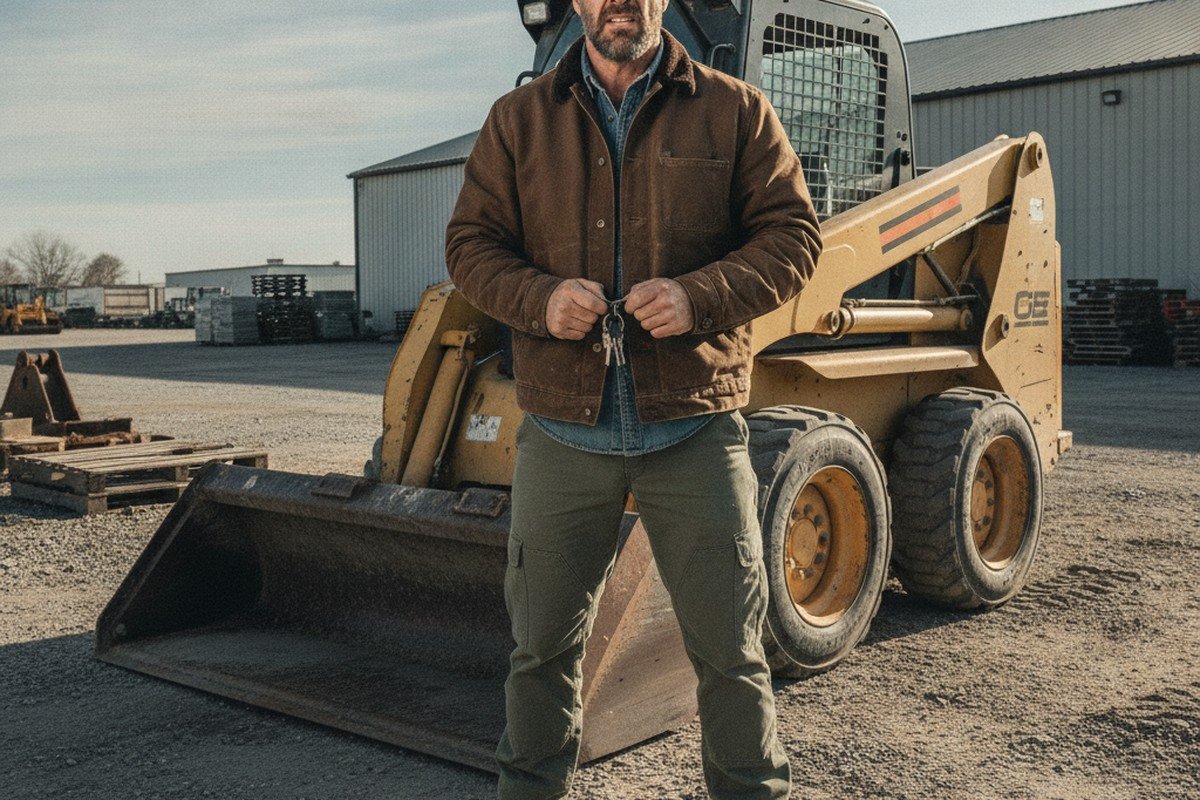
Every morning when I see our yellow skid-steers roll out of the yard, I know that my business stands on solid, unshakeable ground.